
Riga in winter: a magical city under a blanket of snow
Visiting Riga in January was one of those trips that stays with you long after you return home.
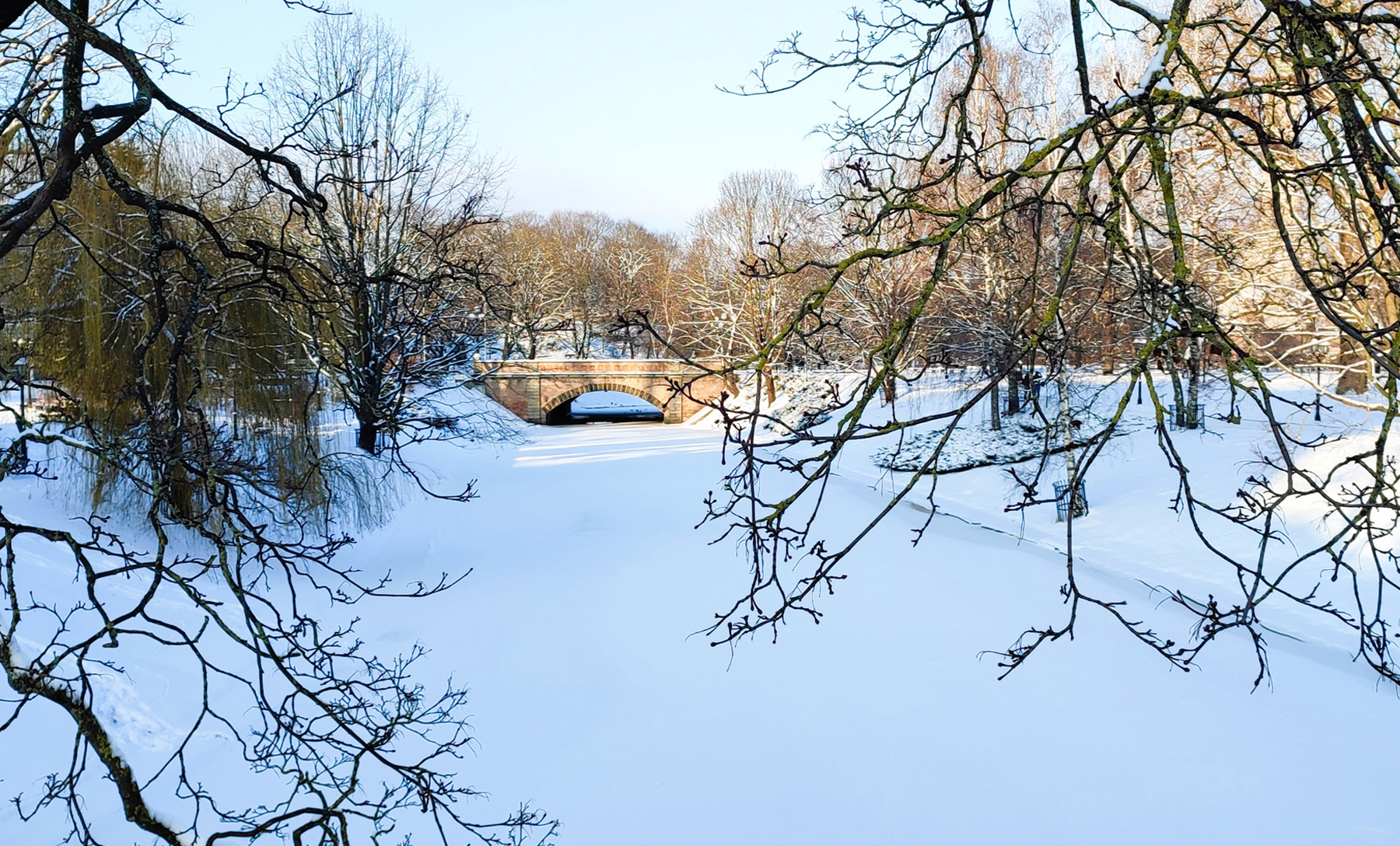
We arrived to blue skies, brilliant sunshine and temperatures of -16°C. Yes, you read that correctly! It was cold enough to make every breath visible, but somehow the freezing temperatures only added to the magic. Riga was covered in a picture-perfect blanket of snow, its rooftops dusted white, red-tiled turrets poking through the snow and church spires reaching into the blue winter sky.
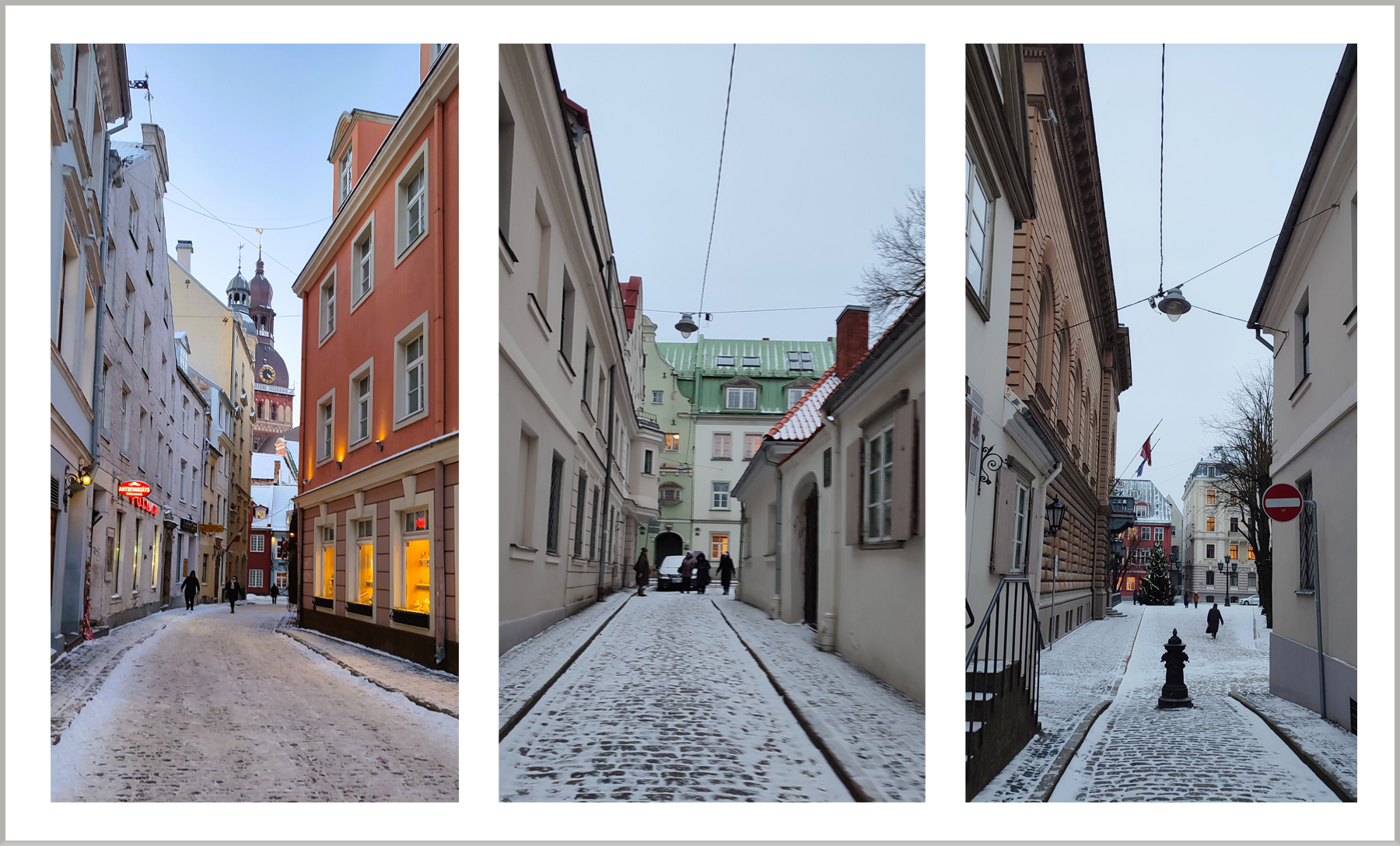
With its cobblestoned streets, colourful buildings and extraordinary architecture, Riga manages to embrace modernity while holding tightly to its rich and sometimes turbulent past. And we loved it!
Exploring Vecrīga, Riga’s Old Town
Our first walks through Vecrīga, Riga’s Old Town, felt almost like stepping into a Christmas card. Narrow cobblestoned streets, snow-covered rooftops, twinkling lights and the festive Christmas market around Dome Square created a wonderfully atmospheric setting.
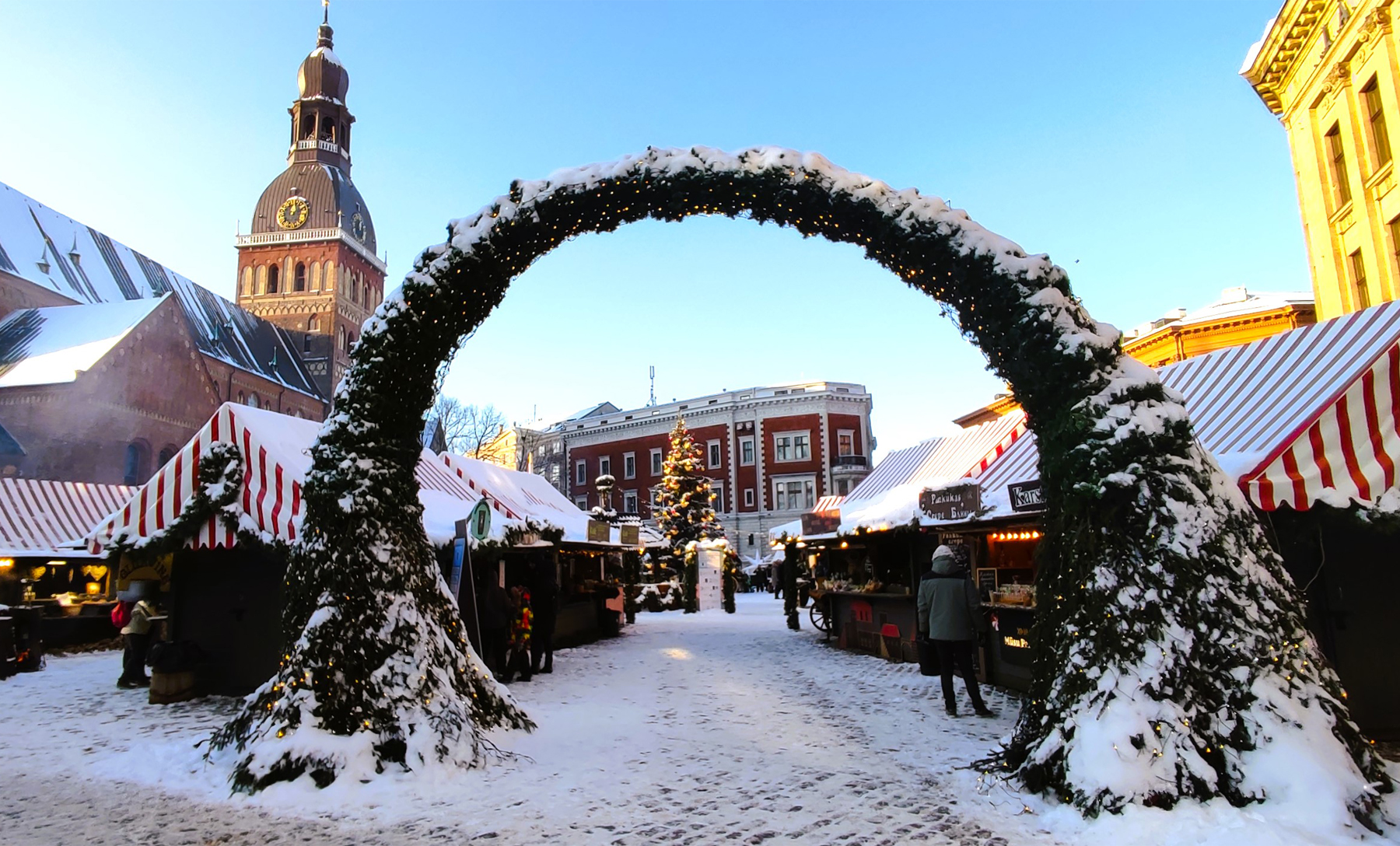
The cold was certainly noticeable, but there was something rather special about wandering through the streets wrapped up in layers, stopping every now and then to admire a building or find somewhere warm for a hot drink.
Dome Square and Riga Cathedral
At the heart of the Old Town is Dome Square, home to the magnificent Riga Cathedral, a stunning medieval masterpiece dating back to the 13th century.
The cathedral dominates the square and, surrounded by the winter scenery, it looks particularly beautiful.
St Peter’s Church and the Bremen Town Musicians
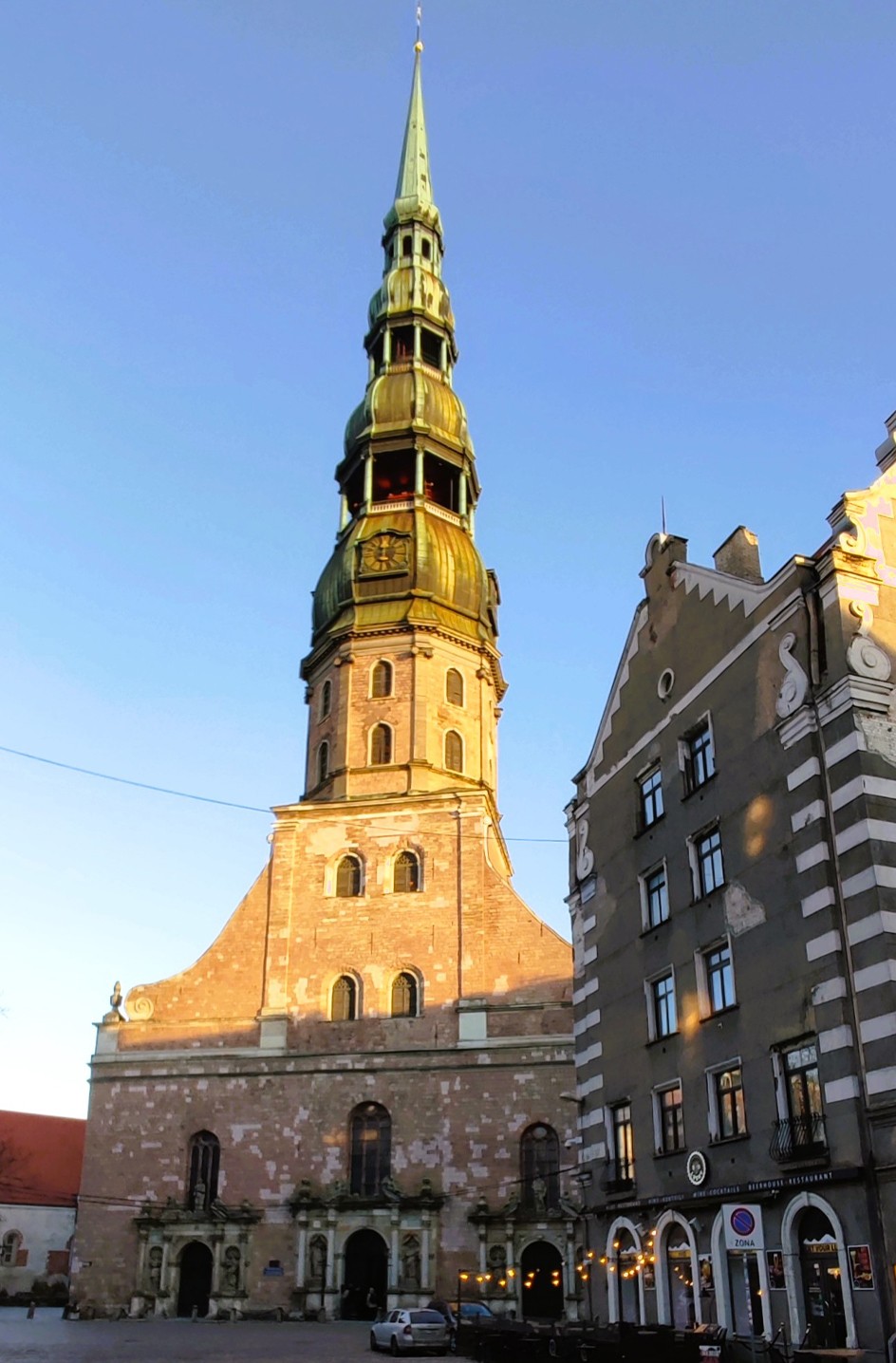
Not far away from Dome square, is medieval St Peter’s Church, whose impressive tower rises above the rooftops of the Old Town, with views stretching towards modern Riga and the Daugava River.
You can buy a ticket to climb the tower, although we didn’t do it on this occasion. At -16°C, we were perfectly happy to admire it from ground level! the Daugava River.
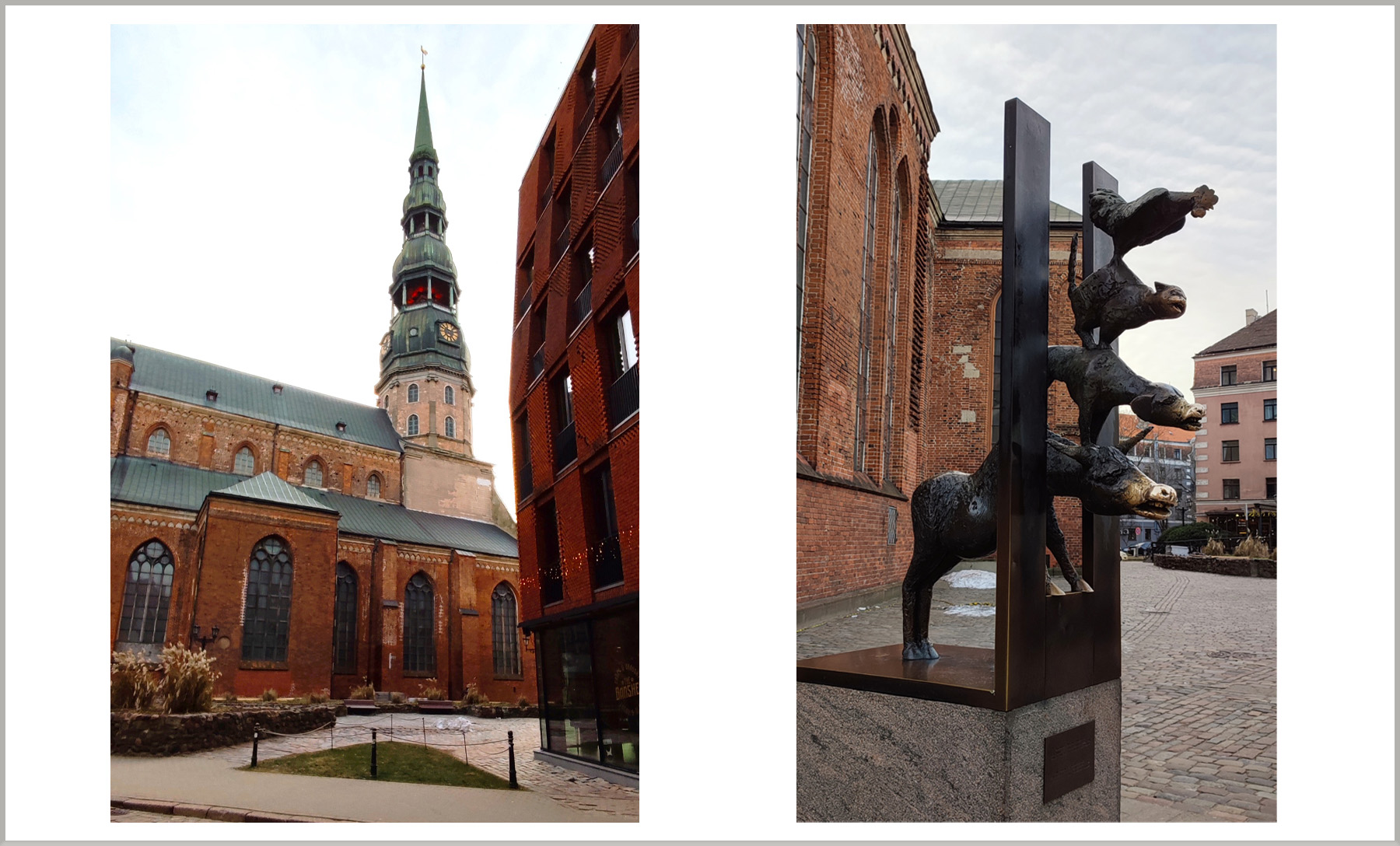
Just behind the church, on Skārņu Street, we discovered one of Riga’s more unusual sights: the Bremen Town Musicians.
The bronze sculpture depicts the donkey, dog, cat and rooster from the famous Brothers Grimm fairy tale. According to the story, the four animals escape to Bremen after fearing they are no longer wanted and set off to become musicians.
The Riga sculpture has a much more political interpretation. The animals are peering through a crack in a wall, symbolising the Iron Curtain and the possibility of seeing a different world. The opening is associated with Gorbachev’s Perestroika and the changes that eventually led to the collapse of Soviet rule.
And, of course, we couldn’t resist rubbing the animals’ noses. Apparently, it brings good luck. We were taking no chances!
Town Hall Square and the House of the Black Heads
Another beautiful part of the Old Town is Town Hall Square, an area with a fascinating history. The square is traditionally associated with the Christmas tree tradition and was once one of the most important areas of medieval Riga. Much of it was destroyed during the Second World War and subsequently rebuilt after Latvia regained independence.
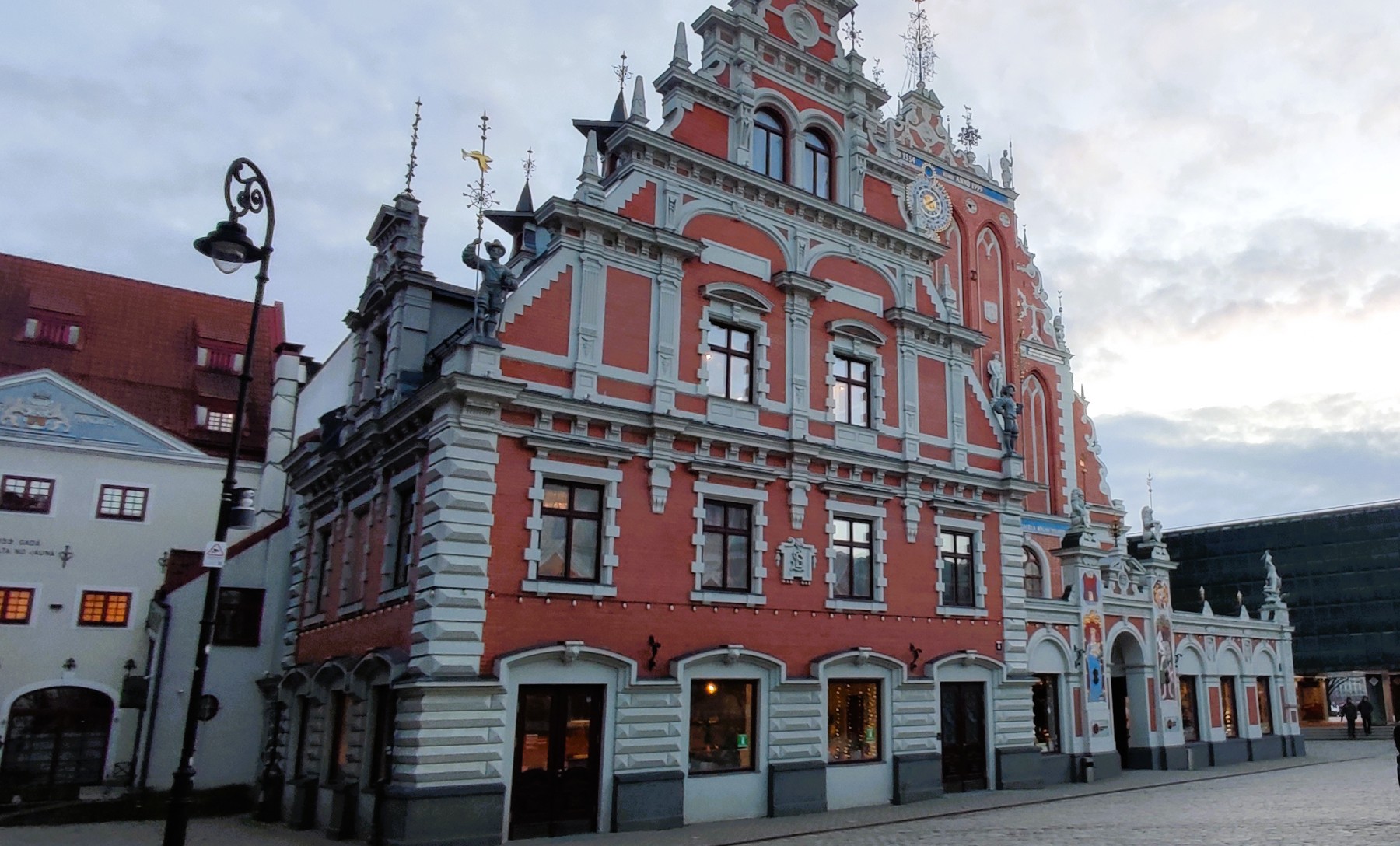
The star of the square is undoubtedly the spectacular House of the Black Heads.
It is one of the most iconic buildings in Latvia and, with its ornate Gothic façade, elaborate decorations and impressive interiors, it’s impossible to walk past without stopping for a closer look.
The building originally belonged to the Brotherhood of Blackheads, a guild of unmarried merchants. It was almost completely destroyed during the Second World War, with only the medieval cellars surviving. Following Latvia’s independence, it was reconstructed and completed in 1999. It even served as the temporary residence of the President of Latvia between 2012 and 2016.
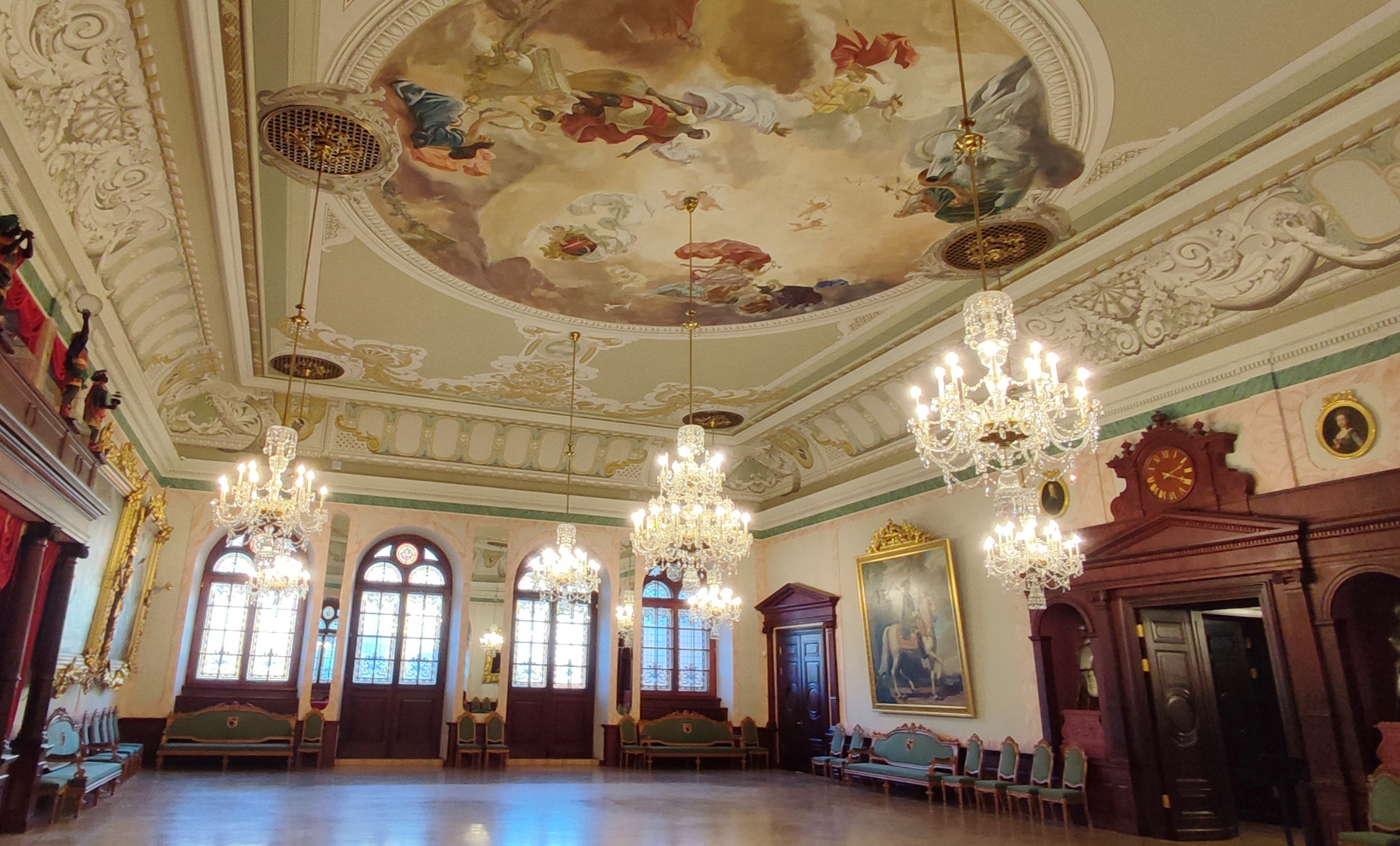
We visited the interior and were so glad we did. The grand rooms and beautifully decorated halls are spectacular, and the tickets were surprisingly affordable. Even better, admission included either a coffee or a glass of sparkling wine.
On a freezing winter day, there was only one obvious choice for us: coffee!
The Curious Cats of Riga
Just off Līvu Square, remember to look up. Perched on the corner turrets of a beautiful building are two copper cats, and they have quite a story to tell.
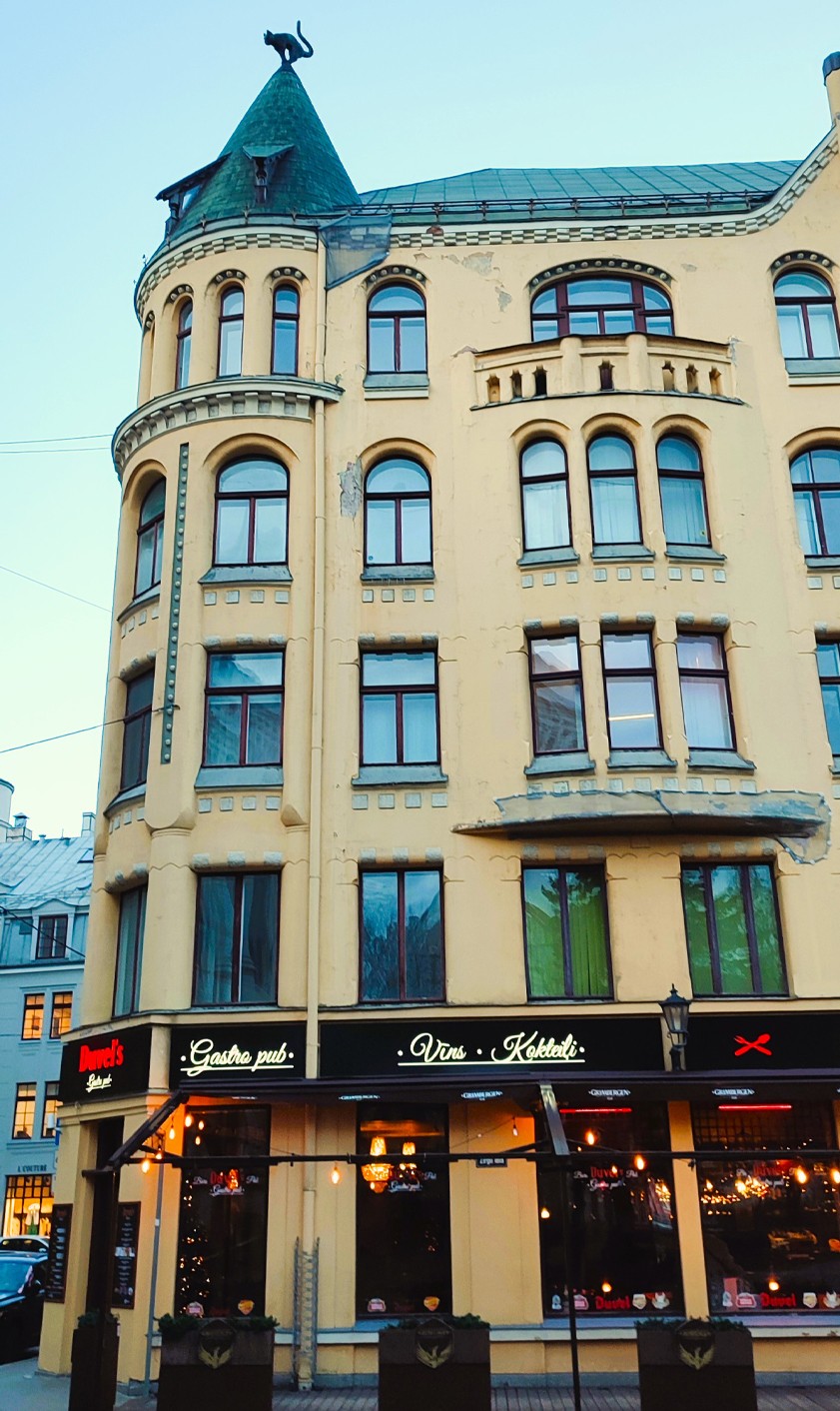
According to legend, the owner of the building was refused membership in the Great Guild. In retaliation, he had the cats positioned with their backsides facing the guild building.
The dispute eventually ended in court, and the cats were turned around. The owner was subsequently admitted to the guild.
The cats became a symbol of protest and are now one of Riga’s most recognisable little curiosities.
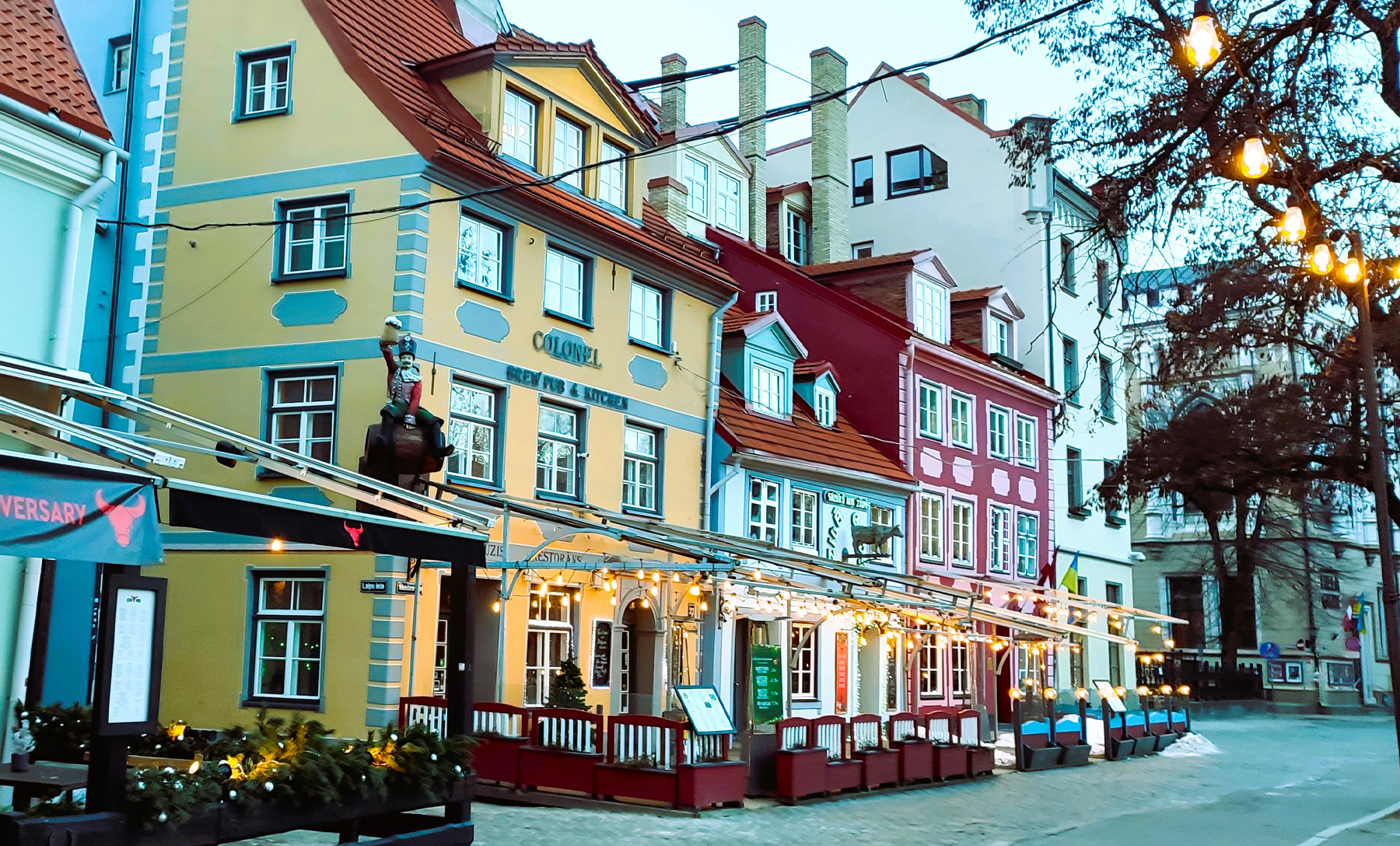
The Three Brothers
A short walk from Dome Square brought us to another of Riga’s architectural treasures: the Three Brothers.
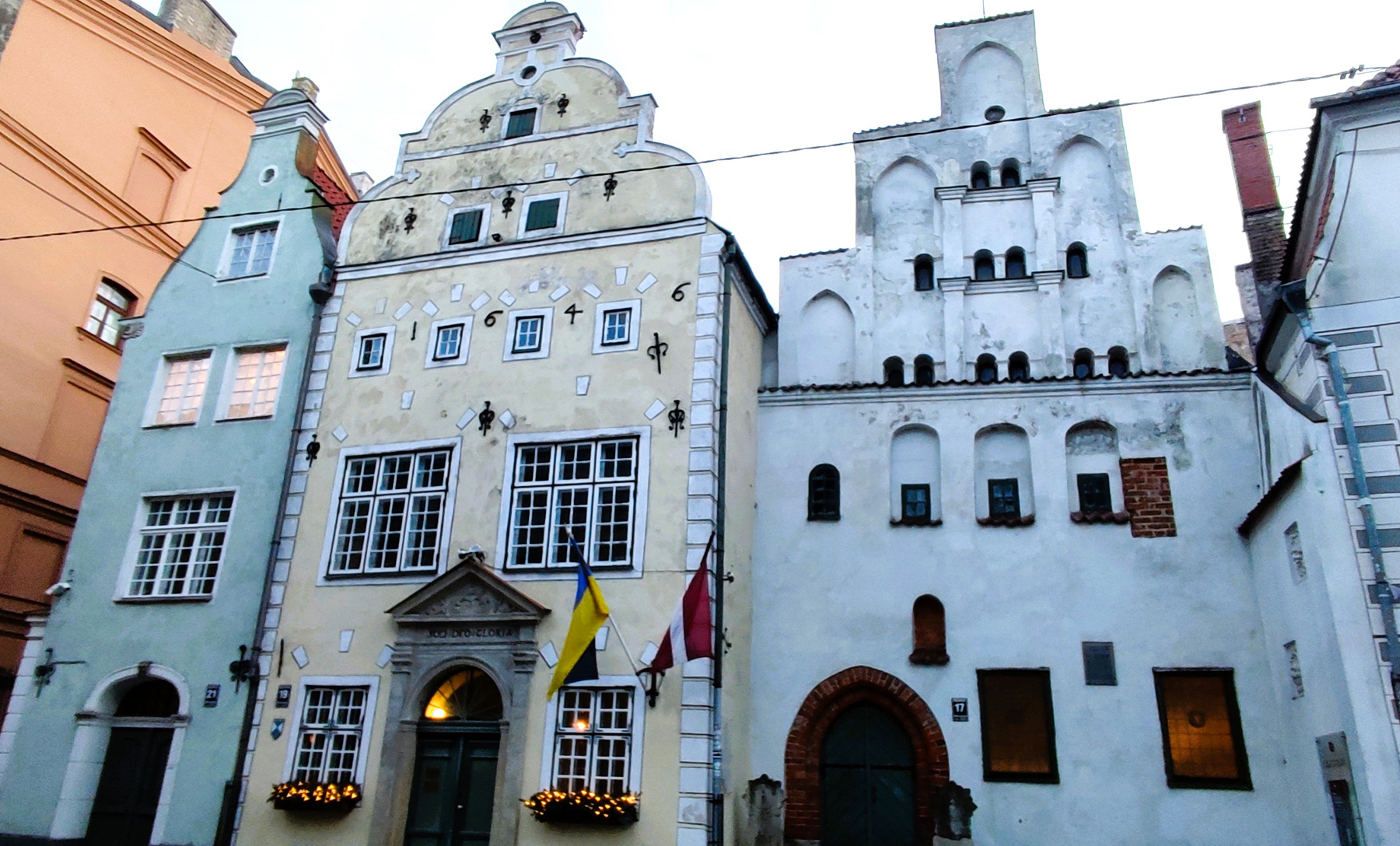
These three medieval houses, at 17, 19 and 21 Maza Pils iela, stand side by side and beautifully illustrate how architectural styles changed over several centuries.
The oldest, number 17, dates from around 1490. Originally used for production and trade, it is relatively plain and combines Gothic and Renaissance elements.
Number 19, built in 1646, is the most elaborate of the three, with Dutch Mannerist influences. Above the entrance is the Latin inscription Soli Deo Gloria — “Glory to God alone.”
Number 21 dates from the second half of the 17th century and represents the Baroque style.
Today, the buildings house the State Inspection for Heritage Protection and the Latvian Museum of Architecture. Three houses, three different periods, and a lovely little glimpse into Riga’s architectural evolution.
The Swedish Gate
A few streets away, on Torņa iela, is the Swedish Gate, the only surviving gate from the eight entrances that once controlled access to medieval Riga. The gate was opened at sunrise and closed at sunset.
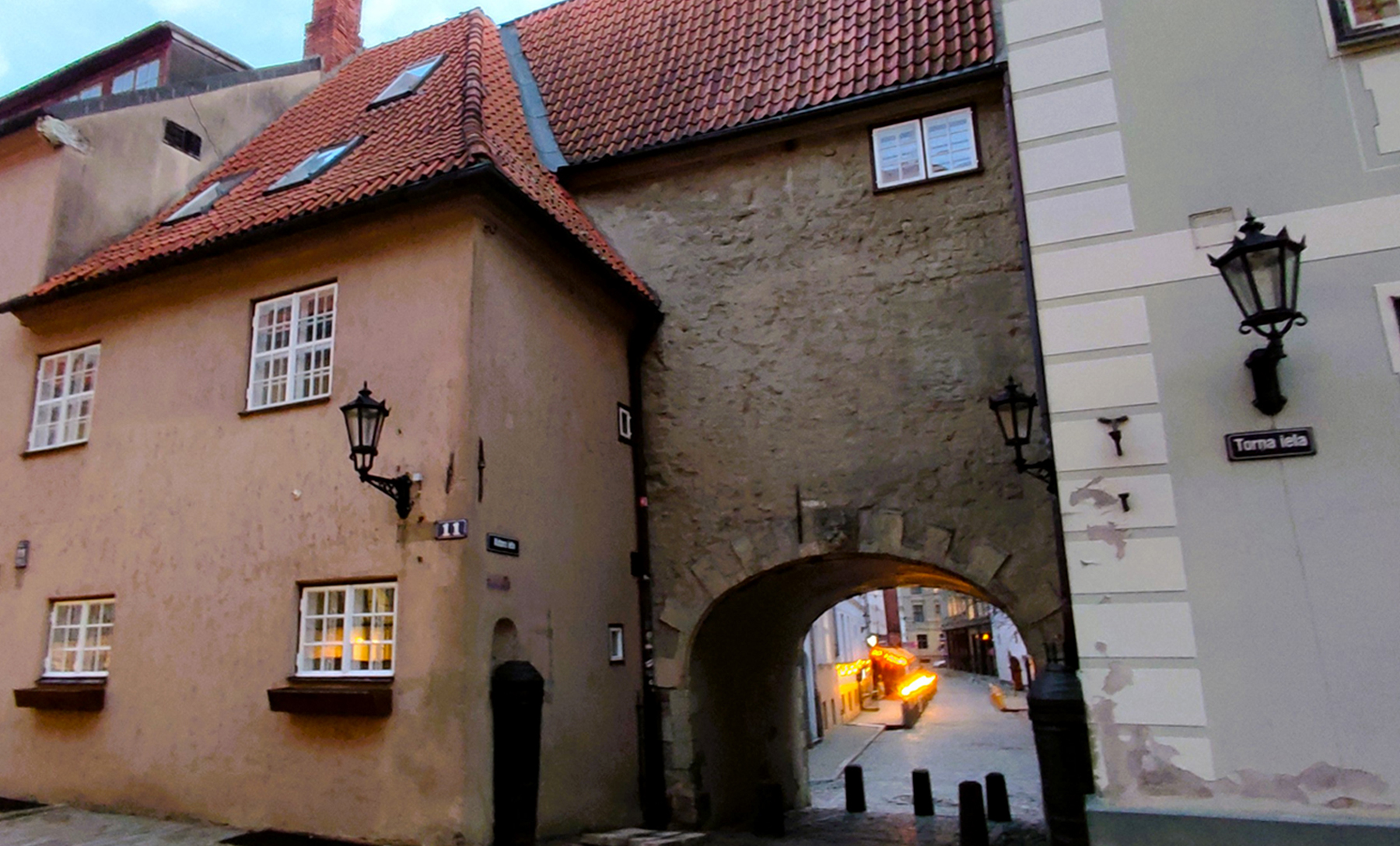
Its survival is rather unusual. The gate was incorporated into an apartment, and its tenant was apparently the city’s executioner. According to tradition, on the morning of an execution, he would place a red rose on his windowsill.
Today, Torņa iela is a charming street, with restaurants and shops on one side and the old city fortifications on the other.
Powder Tower and Latvia’s difficult history
At the end of Torņa iela stands another remnant of Riga’s medieval fortifications, the Powder Tower, which is now part of the Latvian War Museum.
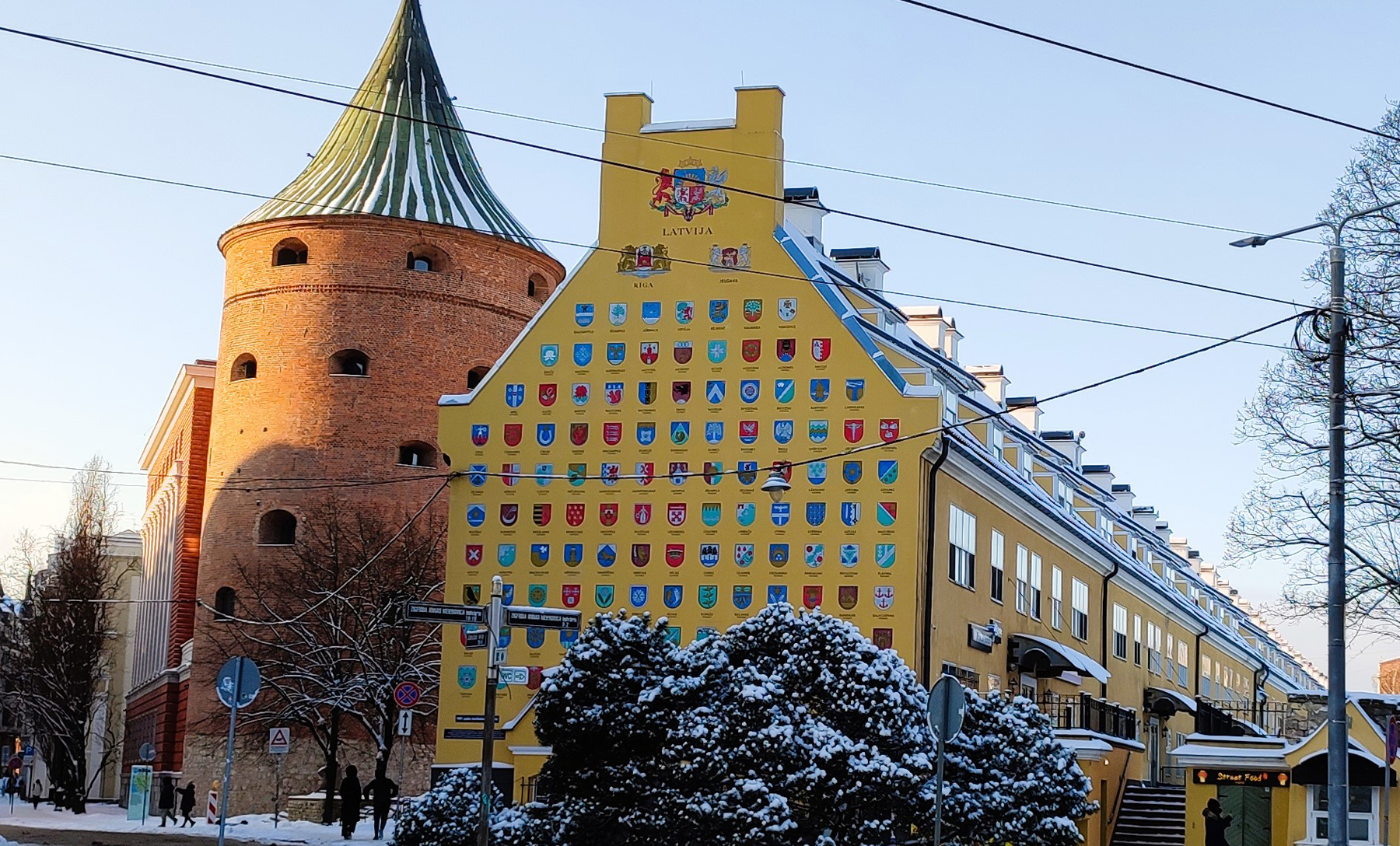
The museum has free admission and explores Latvia’s complex military history, with particular emphasis on the 20th century.
Riga’s strategic location meant that the city was fought over by many powers, including the Germans, Poles, Swedes and Russians. But it was the 20th century that proved particularly devastating. Latvia experienced both Nazi and Soviet occupation, leaving deep scars on the country and its people.
The museum’s collection includes photographs, documents, medals, uniforms and military artefacts, helping to put the city’s complicated past into context.
It isn’t always easy to hear about such a violent history, but I think understanding it is an important part of understanding Riga.
Riga Central Market
Another absolute must-see is Riga Central Market, one of the largest markets in Eastern Europe.
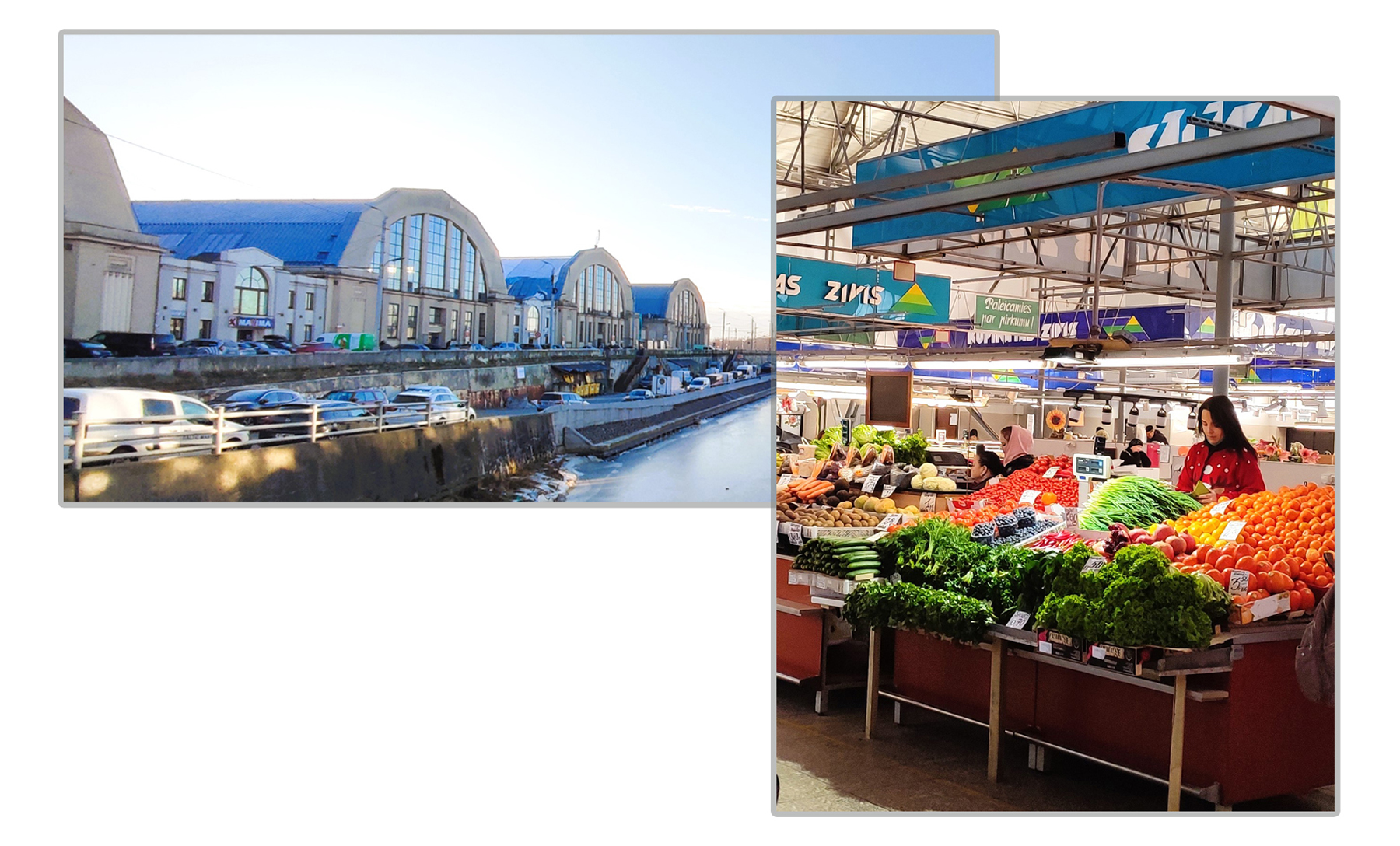
Located close to the Old Town on the banks of the Daugava River, the market occupies five enormous former German Zeppelin hangars dating from the 1920s.
Inside, we found a wonderfully chaotic mixture of stalls selling fresh fruit and vegetables, meat, fish, cheese and all sorts of local produce. There were also plenty of shops selling handicrafts and souvenirs, as the market extends outside too. Among them were traditional woollen mittens, particularly tempting when visiting in January!
The market is also a great place to try Latvian food without spending a fortune.
When we visited, it wasn’t nearly as busy as I had expected, but I can imagine the atmosphere being quite different at peak times.
Riga: an Art Nouveau wonderland
One thing I hadn’t realised before visiting Riga was just how much Art Nouveau architecture the city has.
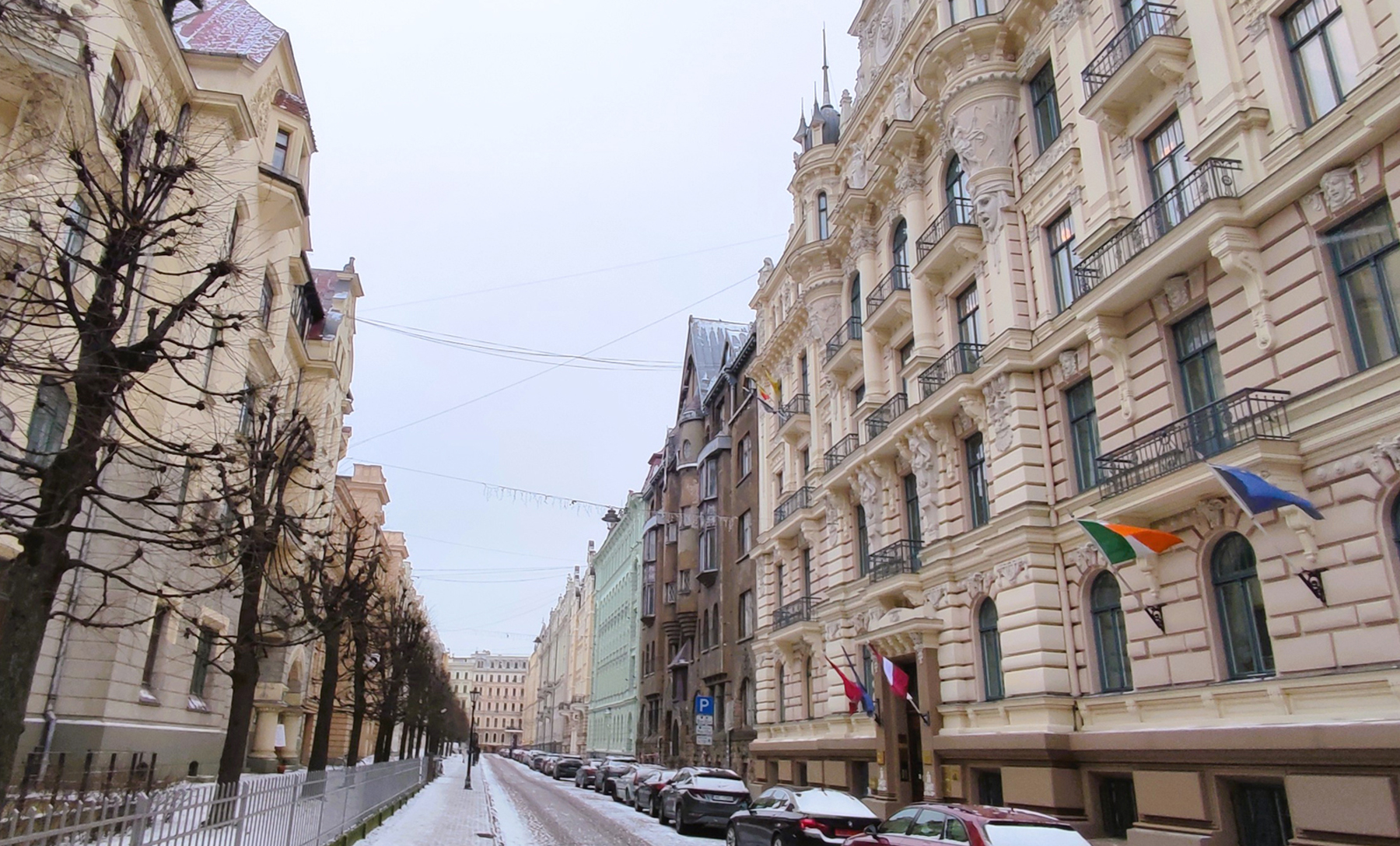
Riga has more than 800 Art Nouveau buildings, making it one of the world’s great Art Nouveau cities. The style became particularly popular here in the late 19th and early 20th centuries, and some of the most spectacular examples can be found along Alberta iela and Elizabeth iela.
The façades are extraordinary, elaborate sculptures, expressive faces, ornate decorations and wonderfully whimsical details.
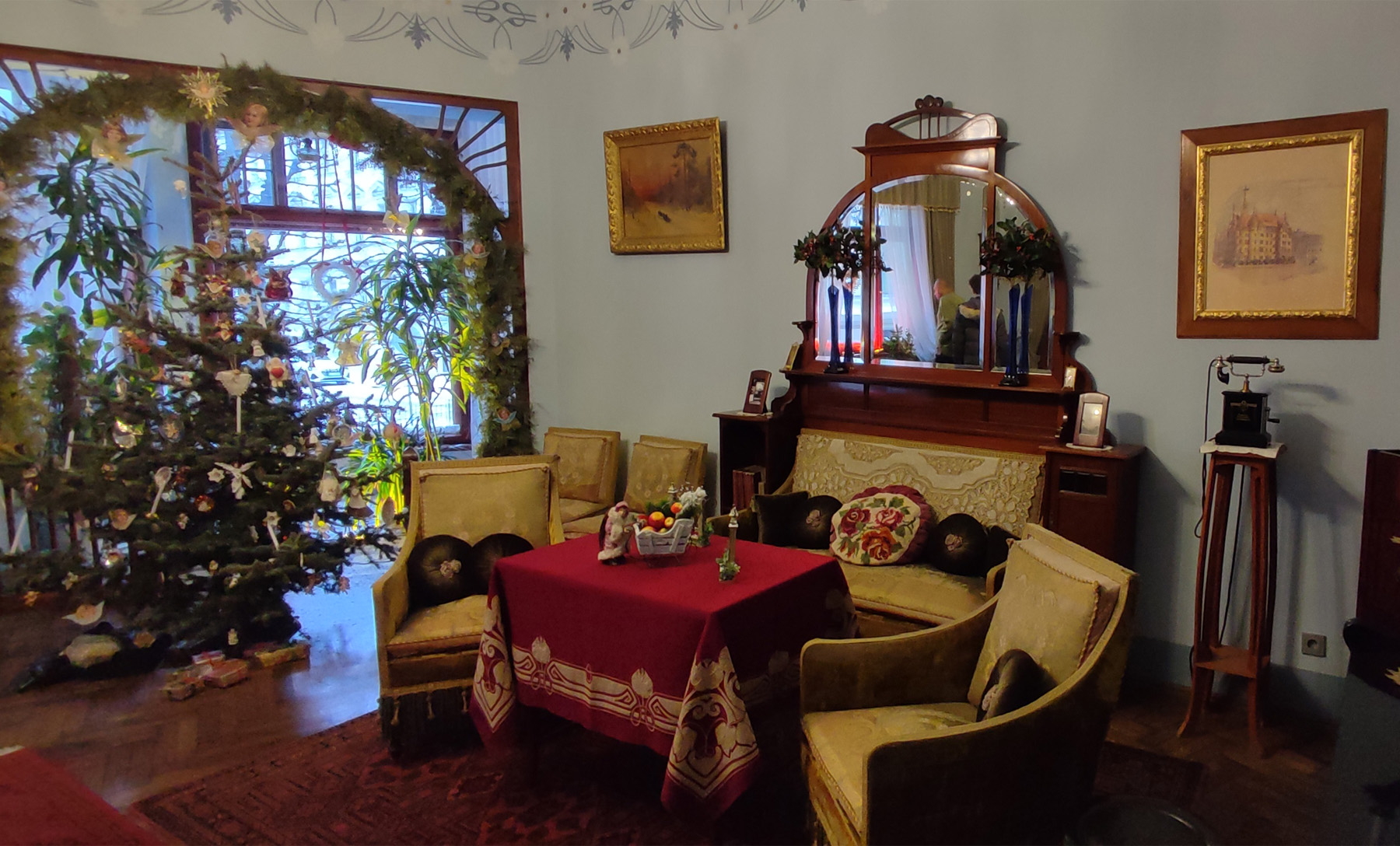
We visited the area during a snow blizzard, which made it even more atmospheric. But after a while, the snow became a bit of a nuisance, so the Art Nouveau Museum at Alberta iela 10b became our much-needed escape.
The museum is housed in a beautifully preserved period apartment and gives a fascinating glimpse into what life would have looked like during the height of the Art Nouveau movement.
The Nativity of Christ Orthodox Cathedral
On our way towards the Art Nouveau district, we stumbled across a magnificent building whose gilded cupolas were gleaming against the snowy sky, the Nativity of Christ Orthodox Cathedral, the largest Russian Orthodox church in Latvia. It remains an active place of worship for Riga’s Russian Orthodox community.
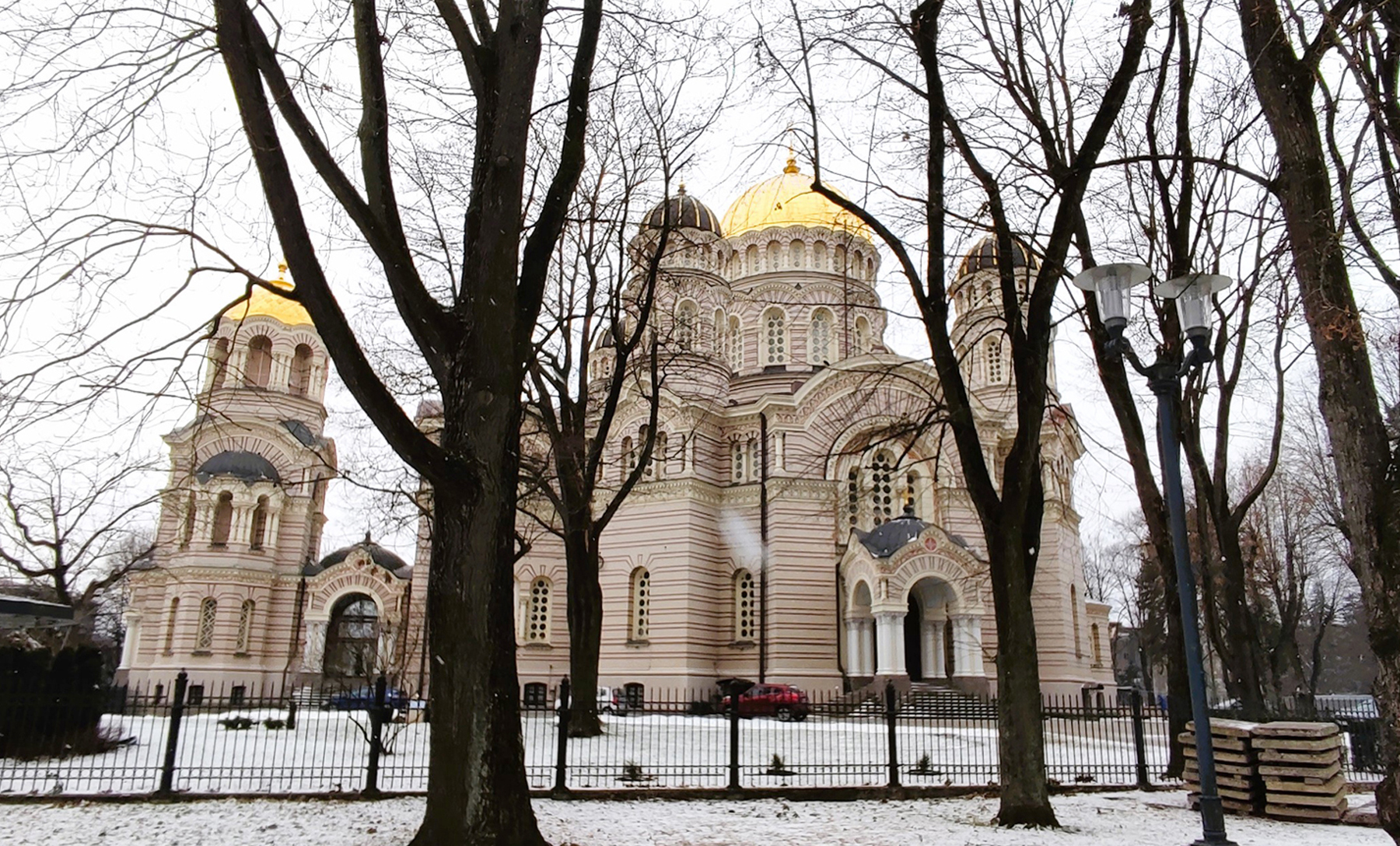
We decided not to go inside as a service was taking place. Somehow, in the quiet snowy surroundings, admiring the cathedral from outside felt like the right thing to do.
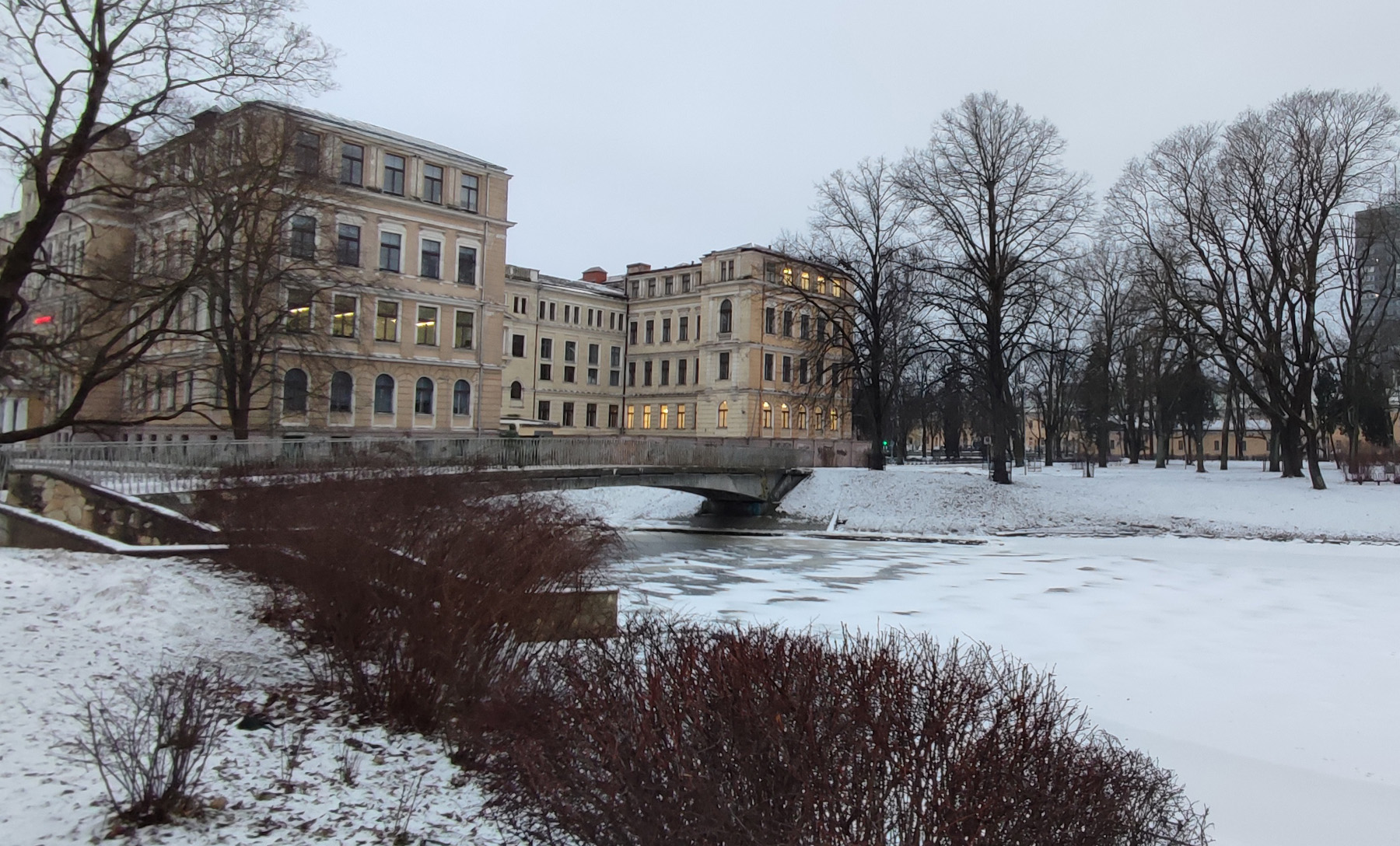
Nearby, Kronvalda Park was almost completely covered in snow when we visited. The canal running through it was frozen, and the whole scene felt wonderfully peaceful and still. Looking at the bare trees and snow-covered paths, I could only imagine how beautiful the park must be in spring and summer, when everything is green and in bloom.
The Corner House: A Darker Side of Riga
As difficult as it can be to hear about Riga’s troubled and often violent past, I feel that no visit to the city is complete without making an effort to understand its history. Behind the beautiful buildings, cobbled streets and charming cafés lies a story of occupation, oppression and resilience that has shaped Riga and its people.
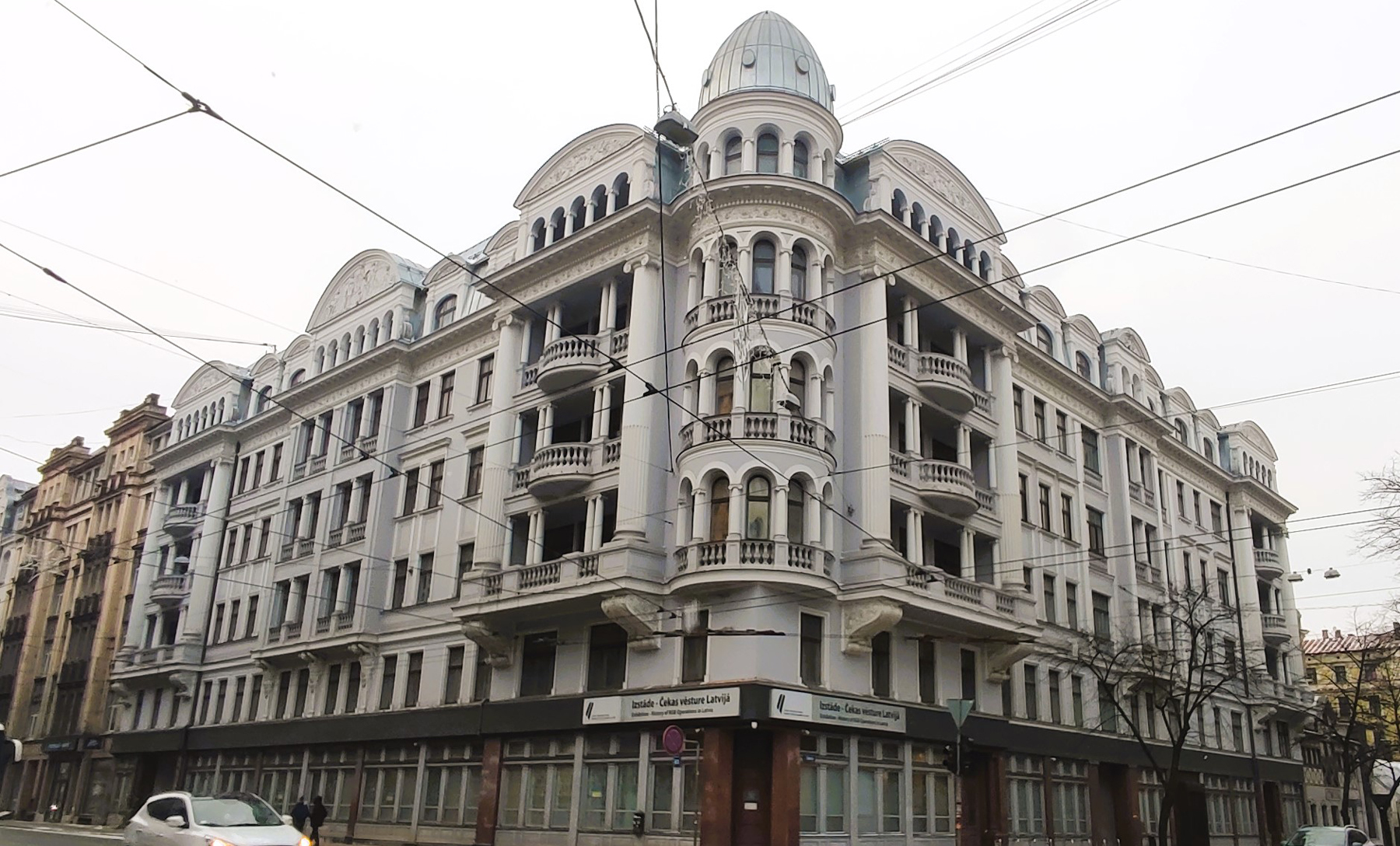
A visit to the Corner House, the former headquarters of the KGB in Latvia, gave us a sobering insight into the country’s more recent history.
During a guided tour, we saw the cells where political prisoners were held and questioned and heard horrifying stories about the Soviet regime and occupation. The basement, where prisoners were confined and tortured, remains much as it was.
It is a difficult place to visit, but an important one. After seeing so much beautiful architecture and hearing stories about Riga’s past, our visit to the Corner House made us truly appreciate just how much the city and its people have endured. It was a sobering reminder that behind Riga’s beautiful façades lies a much darker history, one that is still very much part of the city’s identity today.
The Freedom Monument
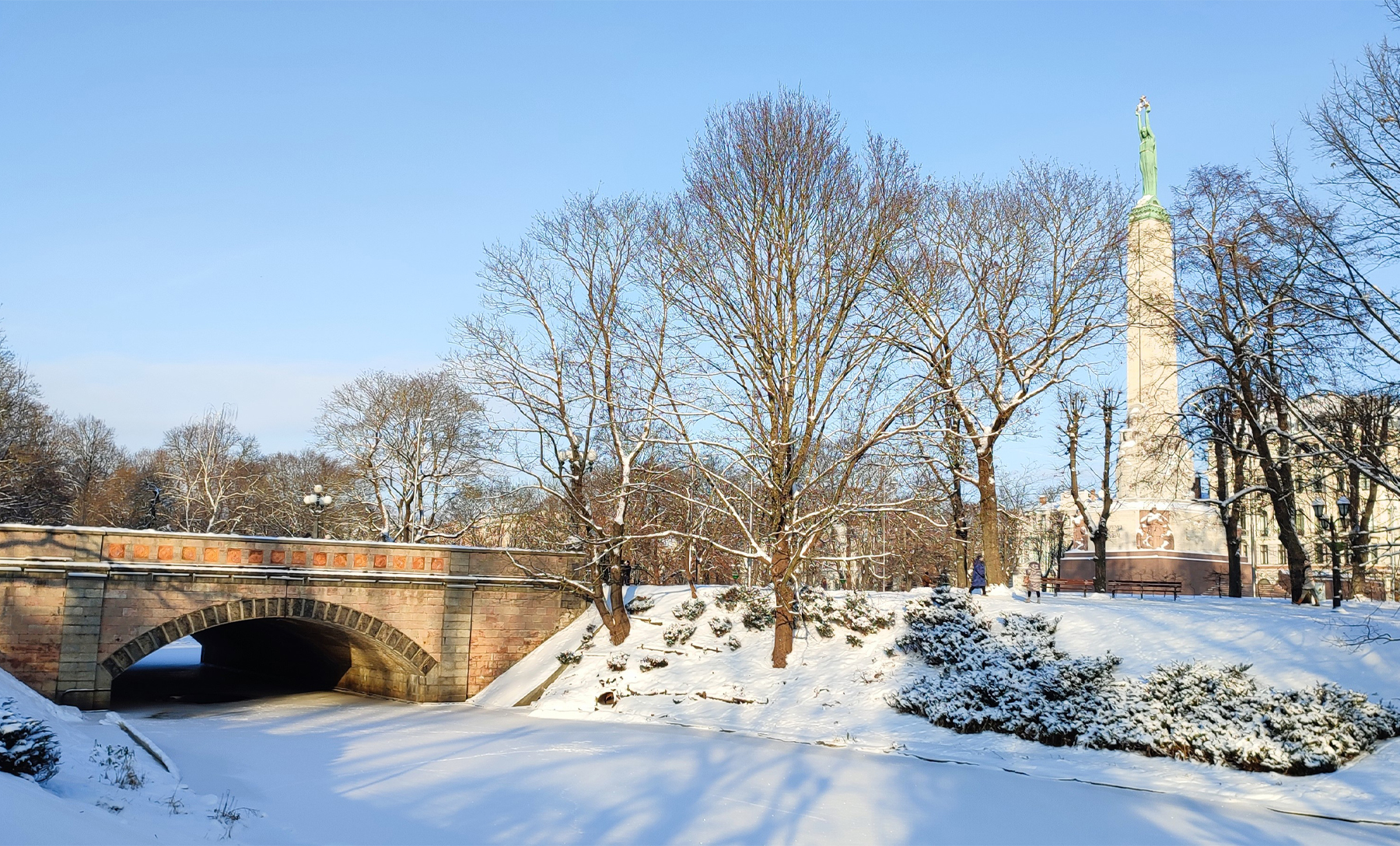
Not far from the Latvian National Opera House and Bastejkalna Park stands the Freedom Monument, erected in 1935 in memory of the soldiers who fought and died for Latvian independence during the First World War. It has become one of the country’s most important symbols of independence.
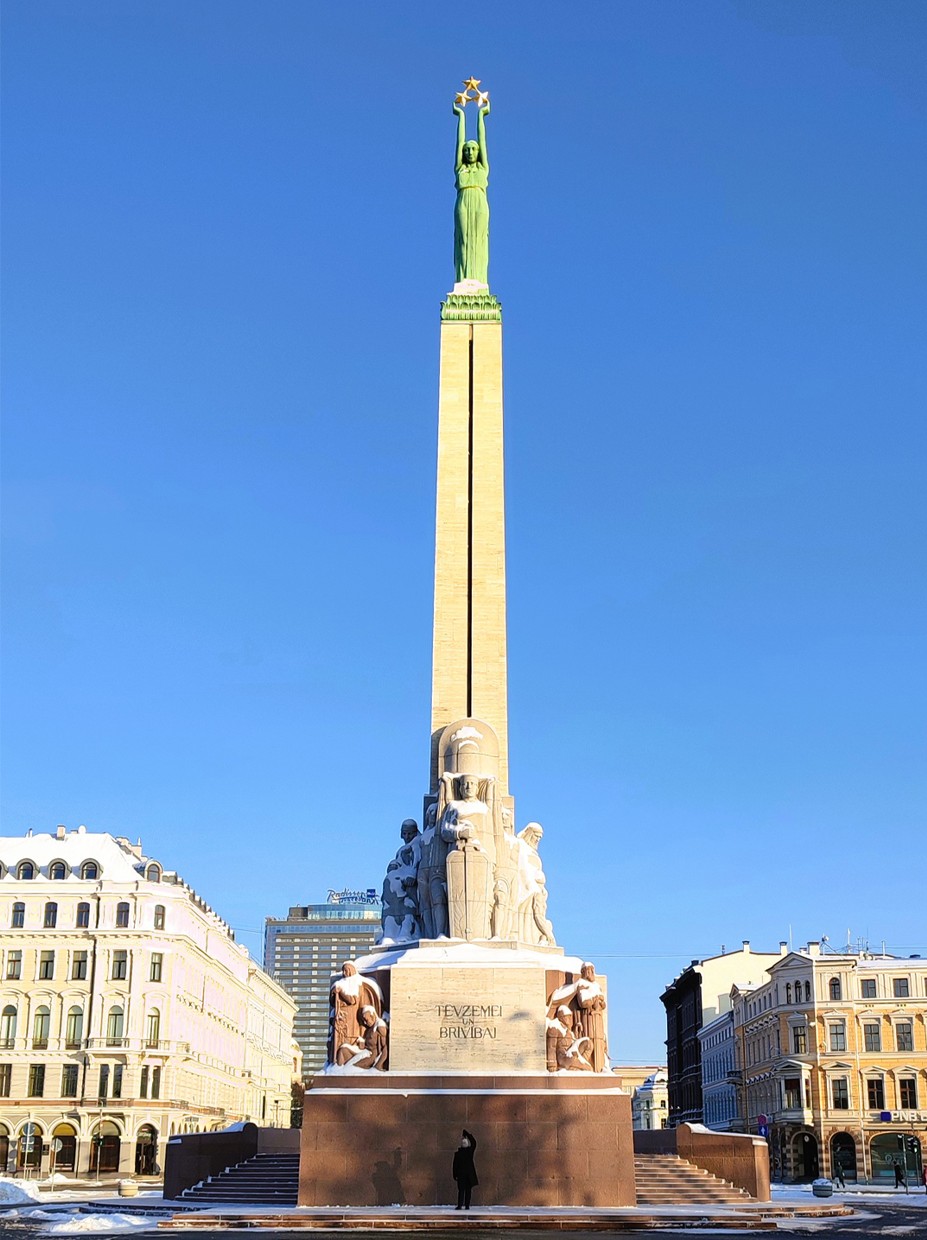
During the late Soviet period, the monument also became a gathering place for those calling for the restoration of Latvian independence, a movement that ultimately succeeded in 1991.
Standing there, knowing the history behind the monument, made it feel like so much more than just another beautiful landmark. There was a real sense of resilience and pride surrounding it, another reminder of how much Latvia and its people had endured and fought to preserve their independence.
Riga Castle
Although it doesn’t immediately look like the stereotypical castle, Riga Castle is one of Latvia’s largest medieval castles.
It stands on the banks of the Daugava River and has a long and complicated history. Today, it is the official residence of the President of Latvia.
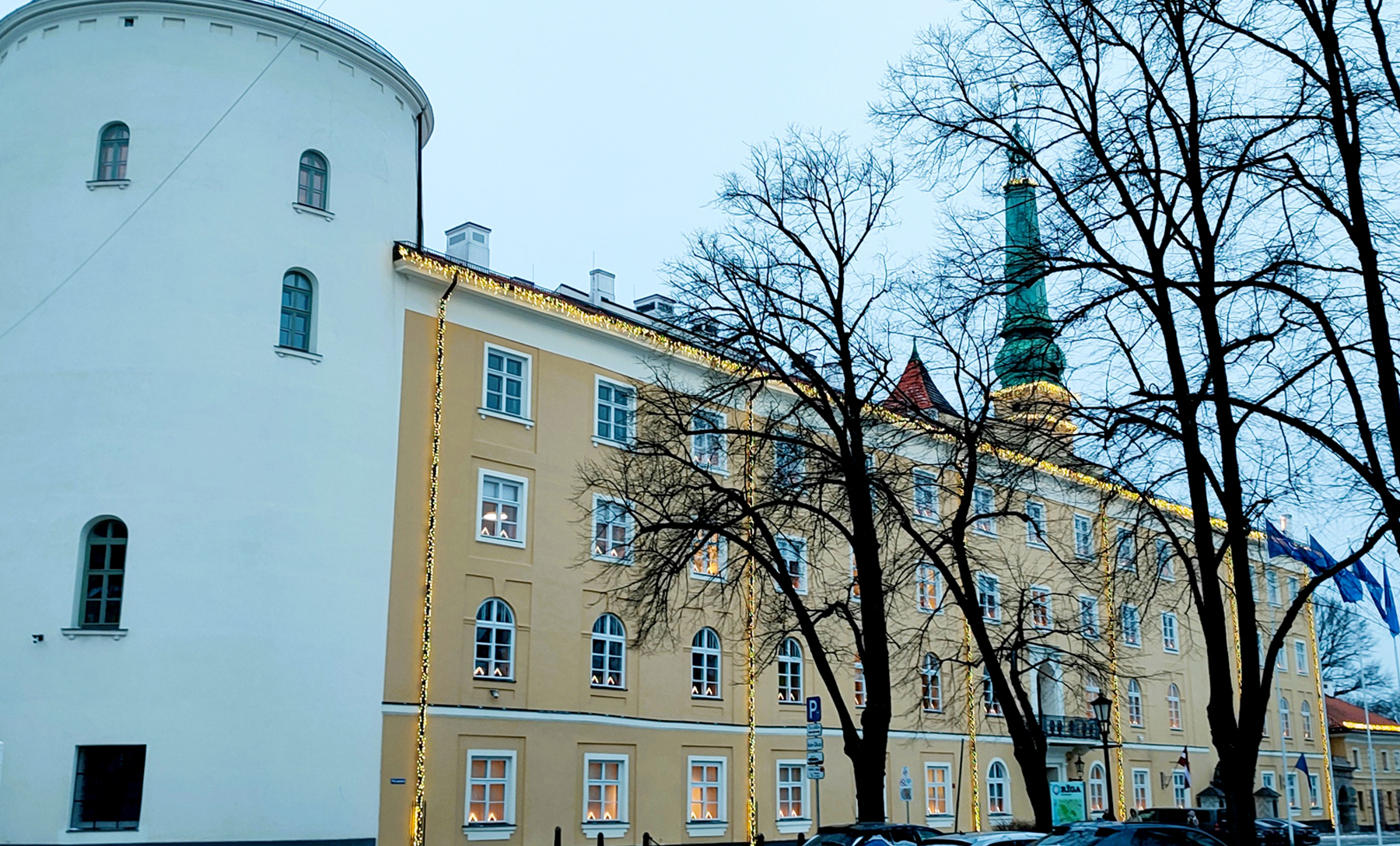
We only had a quick look from outside as we were on our way to somewhere warm, one of the recurring themes of our January trip!
Jūrmala: A Frozen Baltic Beach
We couldn’t visit Riga in winter without taking a trip to the Baltic coast.
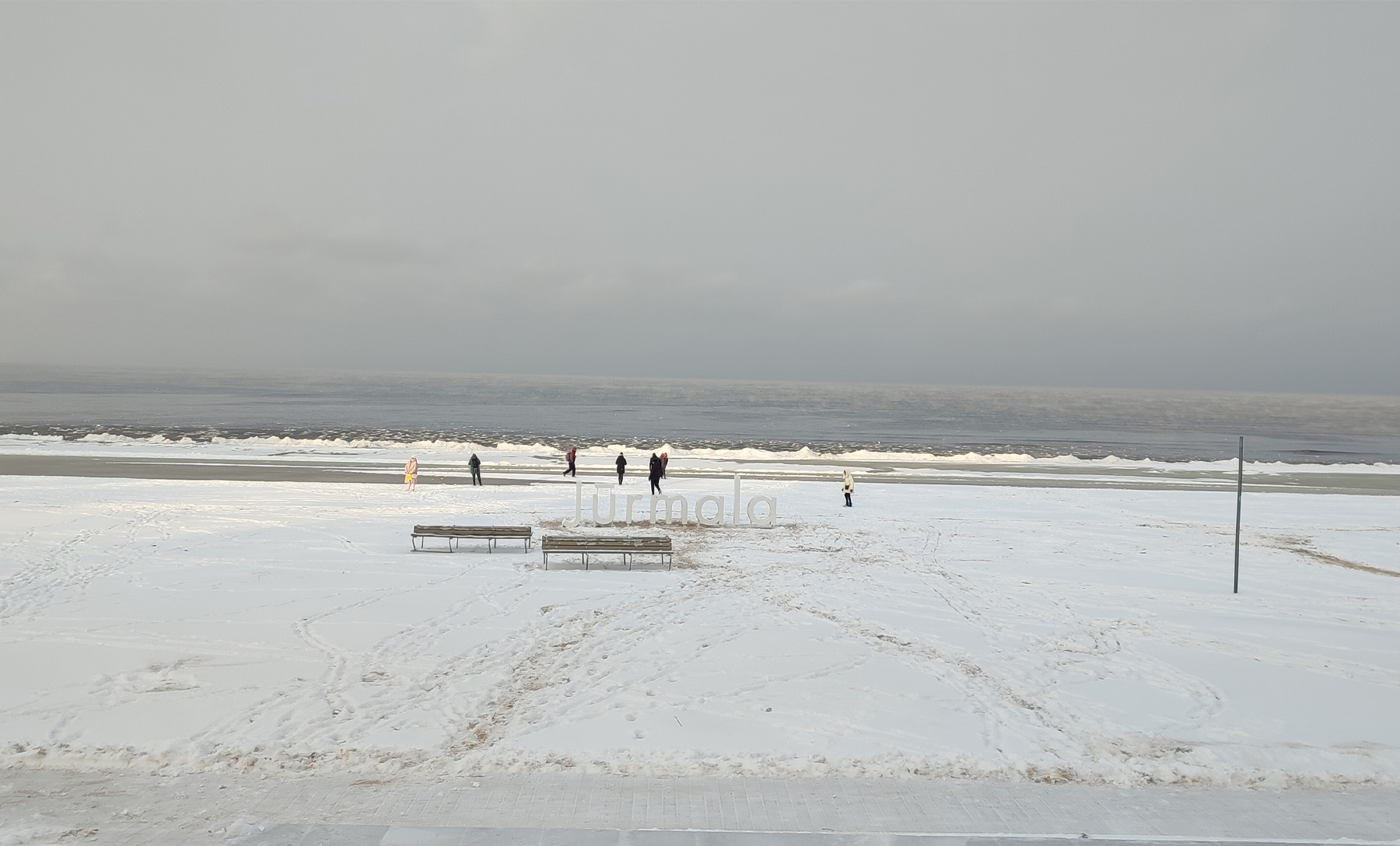
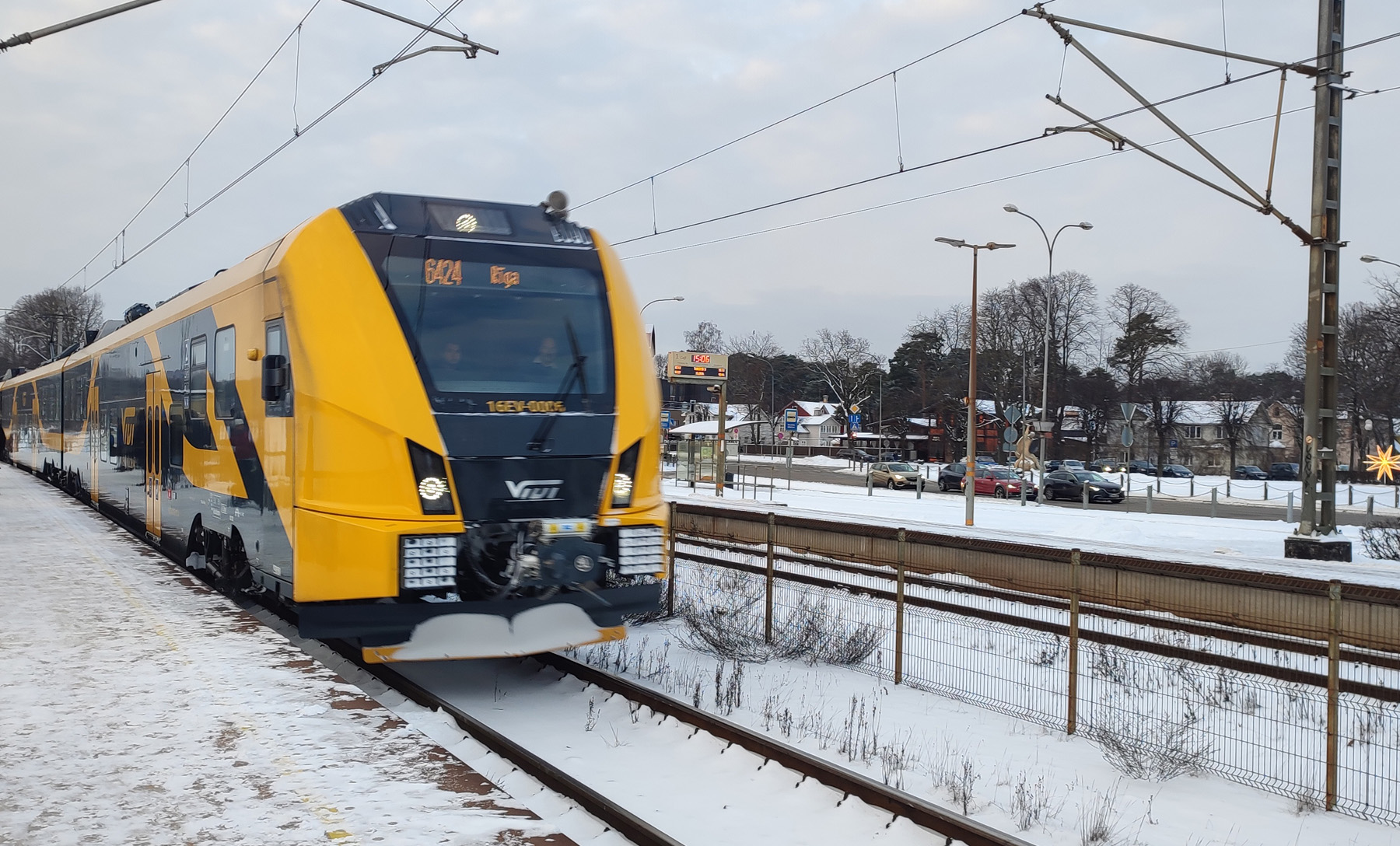
Just around 30 minutes by train from Riga lies Jūrmala, a popular seaside resort on the Gulf of Riga. The train journey itself was part of the experience, taking us through small villages and snow-covered forests. And the price was almost unbelievable, a return ticket to Majori, the main railway stop and a natural starting point for exploring Jūrmala, cost less than €2.
As we watched the snowy landscape go by from the warmth of the train, it was hard to believe that, just a short journey from the city, we would soon be standing beside the frozen Baltic Sea.
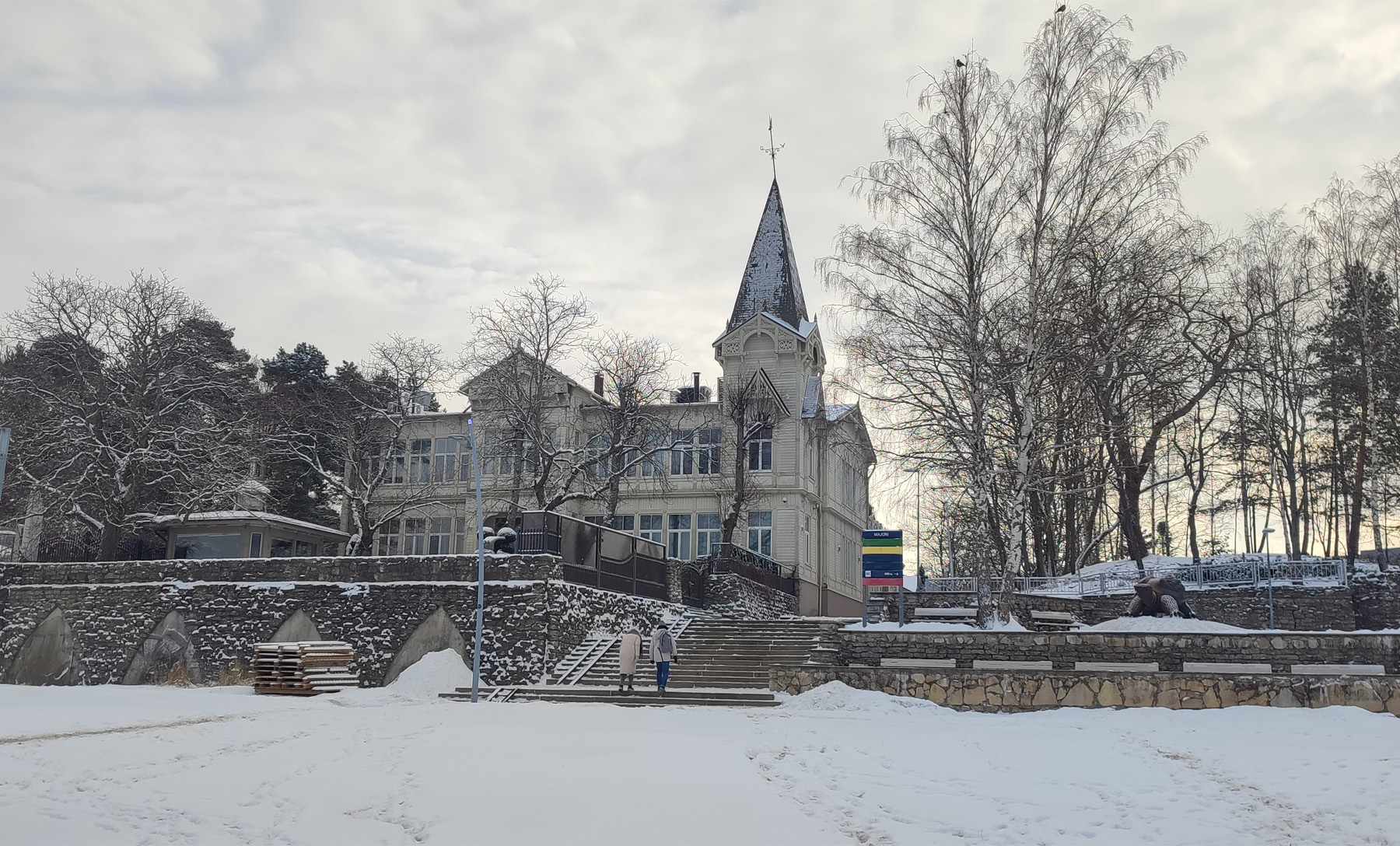
When we arrived in Majori, we headed straight towards the beach. And what a sight! The beach was completely white and frozen, stretching into the distance beneath a pale winter sky. Small, lazy waves broke into icy blocks along the shore, and it was almost impossible to tell where the beach ended and the sea began. It was surreal and absolutely stunning.
After walking along the frozen coastline, our fingers were beginning to lose the will to live, so we escaped into a wonderfully designed glass-fronted café for a hot drink. Sitting there, looking out at the frozen Baltic while slowly thawing our hands, was one of those simple travel moments that I’ll remember for a long time.
Right by the seaside stands the Baltic Beach Hotel & Spa, one of Jūrmala’s best-known spa resorts. The hotel was completely renovated in 2004, but its story goes back to the Soviet era, when Jūrmala was one of the most desirable holiday destinations in the entire USSR. The resort became particularly popular with the Communist Party elite and high-ranking officials, including Nikita Khrushchev and Leonid Brezhnev.
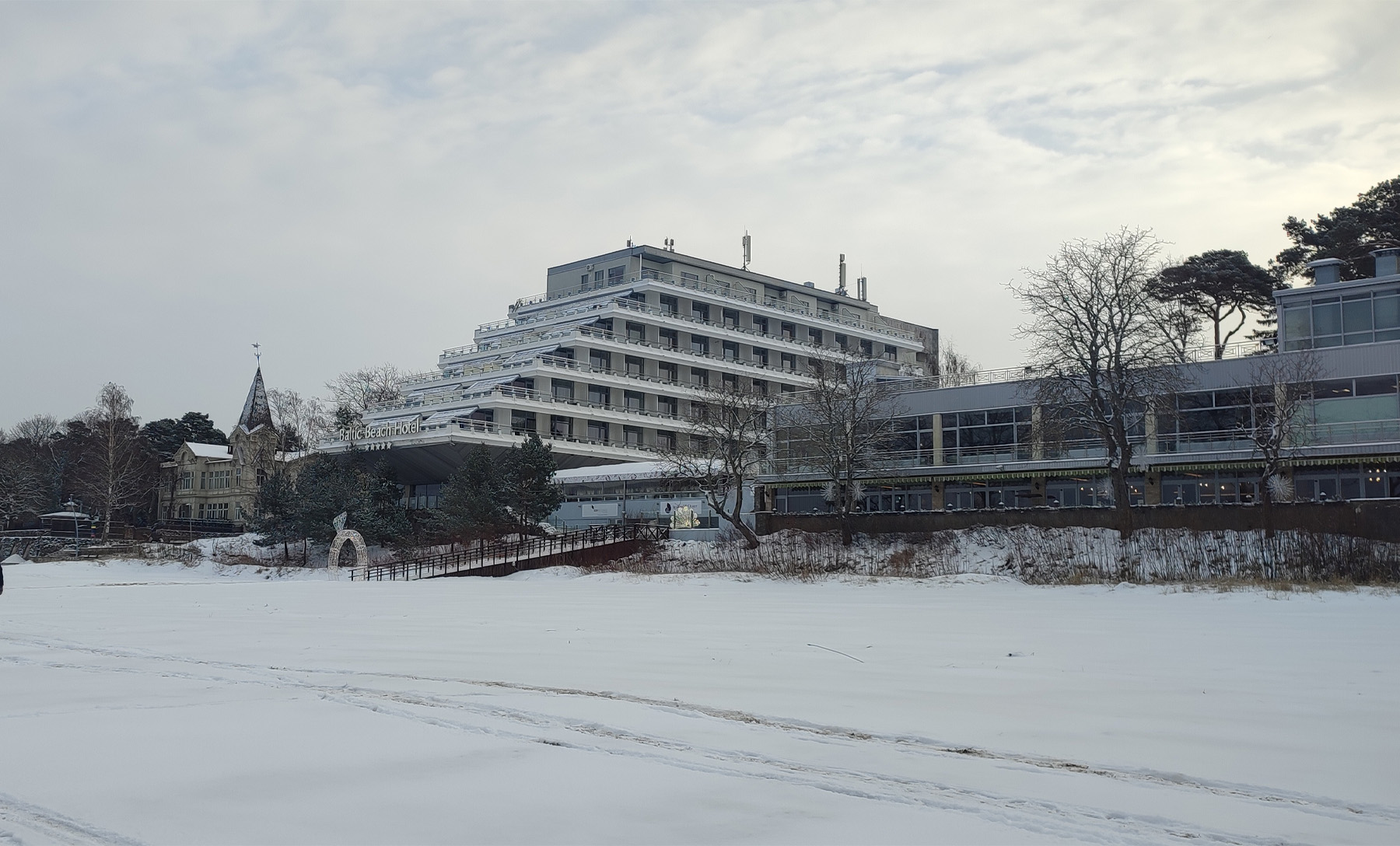
A holiday in Jūrmala was considered such a privilege that it was sometimes used as an incentive for party members who had performed well in their fields. By the early 1980s, Jūrmala had become one of the Soviet Union’s most prestigious spa resorts, surpassed in prominence only by Sochi in southern Russia and Yalta in Crimea.
Standing on the frozen Baltic coast, it was fascinating to think that this peaceful seaside resort had once been such an exclusive retreat for the Soviet elite. It was another unexpected glimpse into the layers of history we kept discovering throughout our trip.
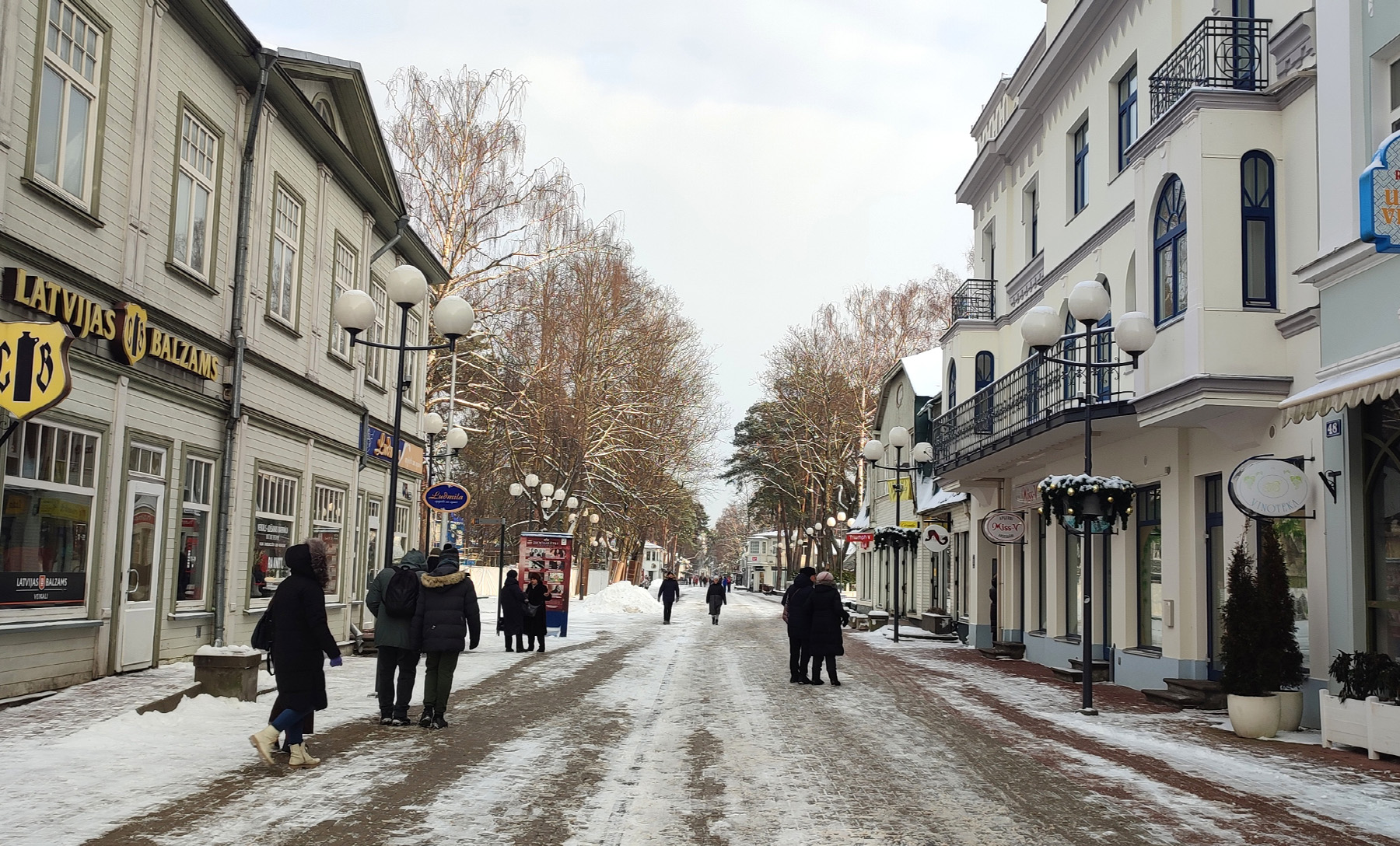
Majori itself is a small, cosy town with charming cafés, little shops and a lovely collection of historic houses. Among them are several beautiful Art Nouveau buildings, with their ornate details and distinctive façades adding character to the quiet streets. Many of the town’s buildings date back to the late 19th and early 20th centuries, reflecting the period when Jūrmala was becoming a fashionable seaside resort.
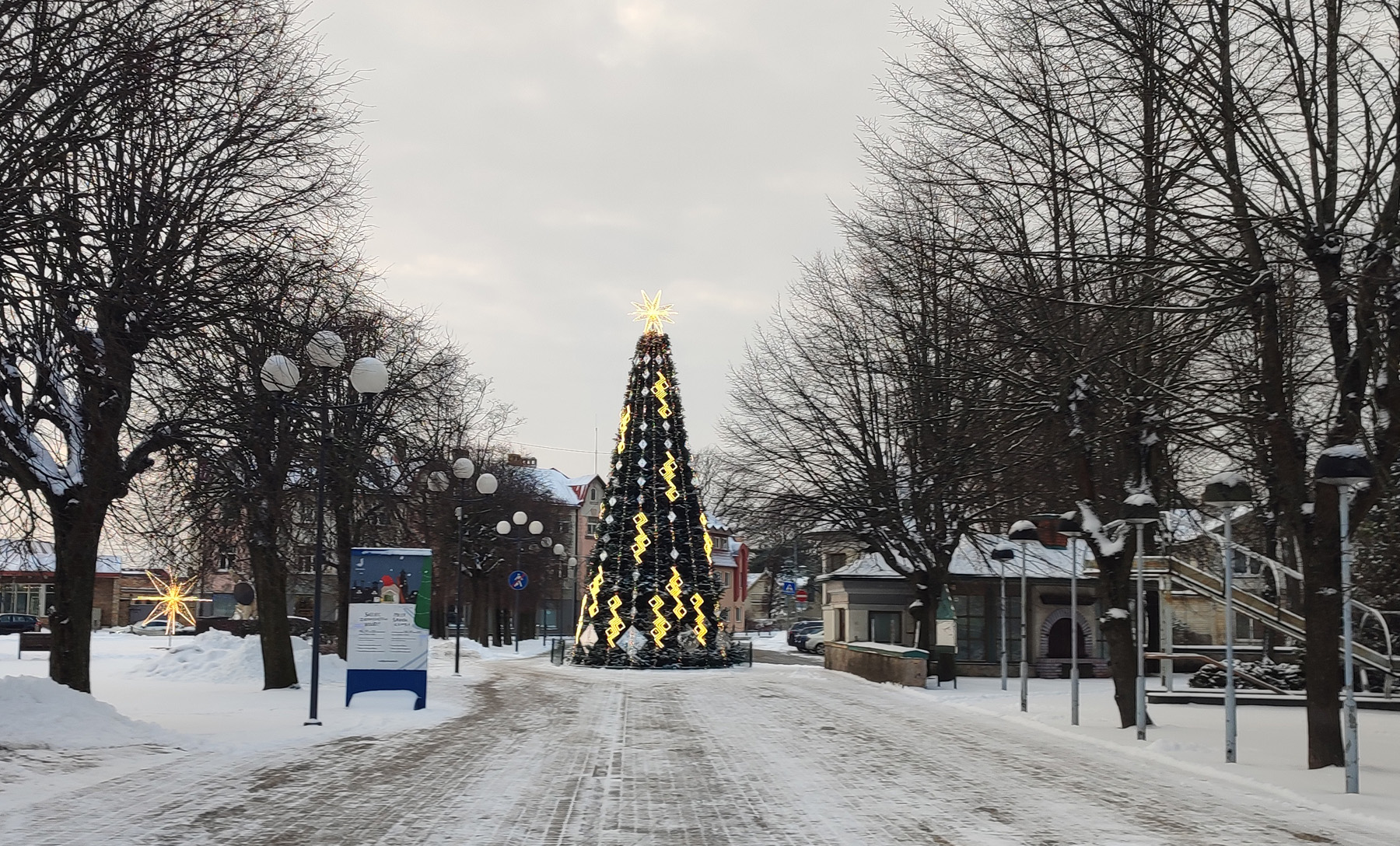
When we visited, a huge Christmas tree still stood in the town centre, covered in snow and glowing against the winter darkness. The combination of the twinkling lights, snowy streets and beautiful buildings gave Majori a wonderfully festive and cosy atmosphere.
Our favourite places do eat & drink in Riga
One of the unexpected pleasures of visiting Riga in January was discovering its cosy cafés.
When you’re walking around in temperatures approaching -20°C, finding somewhere warm becomes less of a luxury and more of a survival strategy!
Crumble Cake
Tucked away at Jāņa iela 14, Crumble Cake was probably our favourite café.
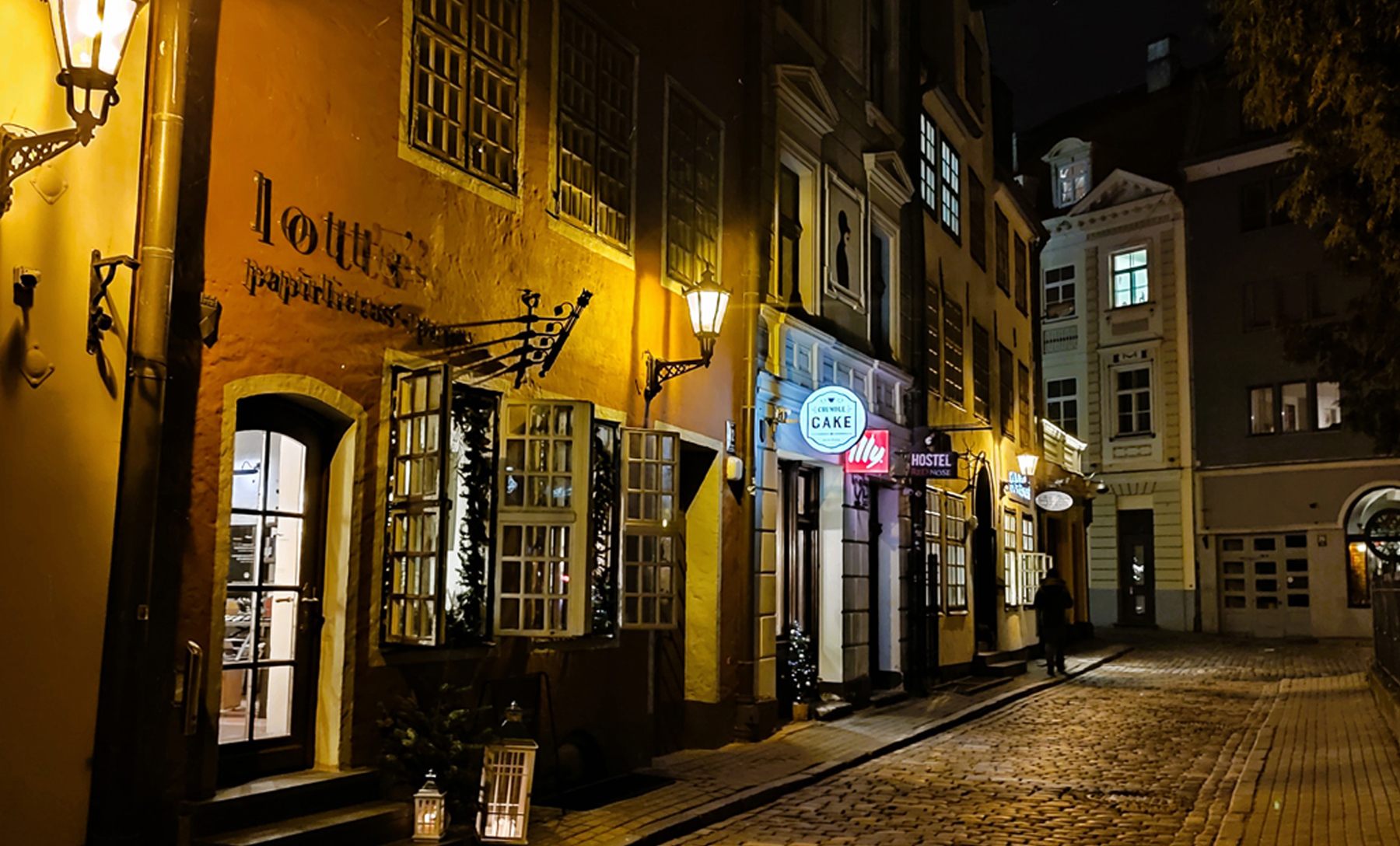
We found it by chance while looking for somewhere to shelter from a snow shower and immediately loved the cosy, stylish interior, good coffee, homemade cakes and friendly service.
It was also where we had our first taste of Black Balsam.
Parunāsim
Just a short walk from St Peter’s Church is Parunāsim, known as “the most romantic cafe in Riga”.
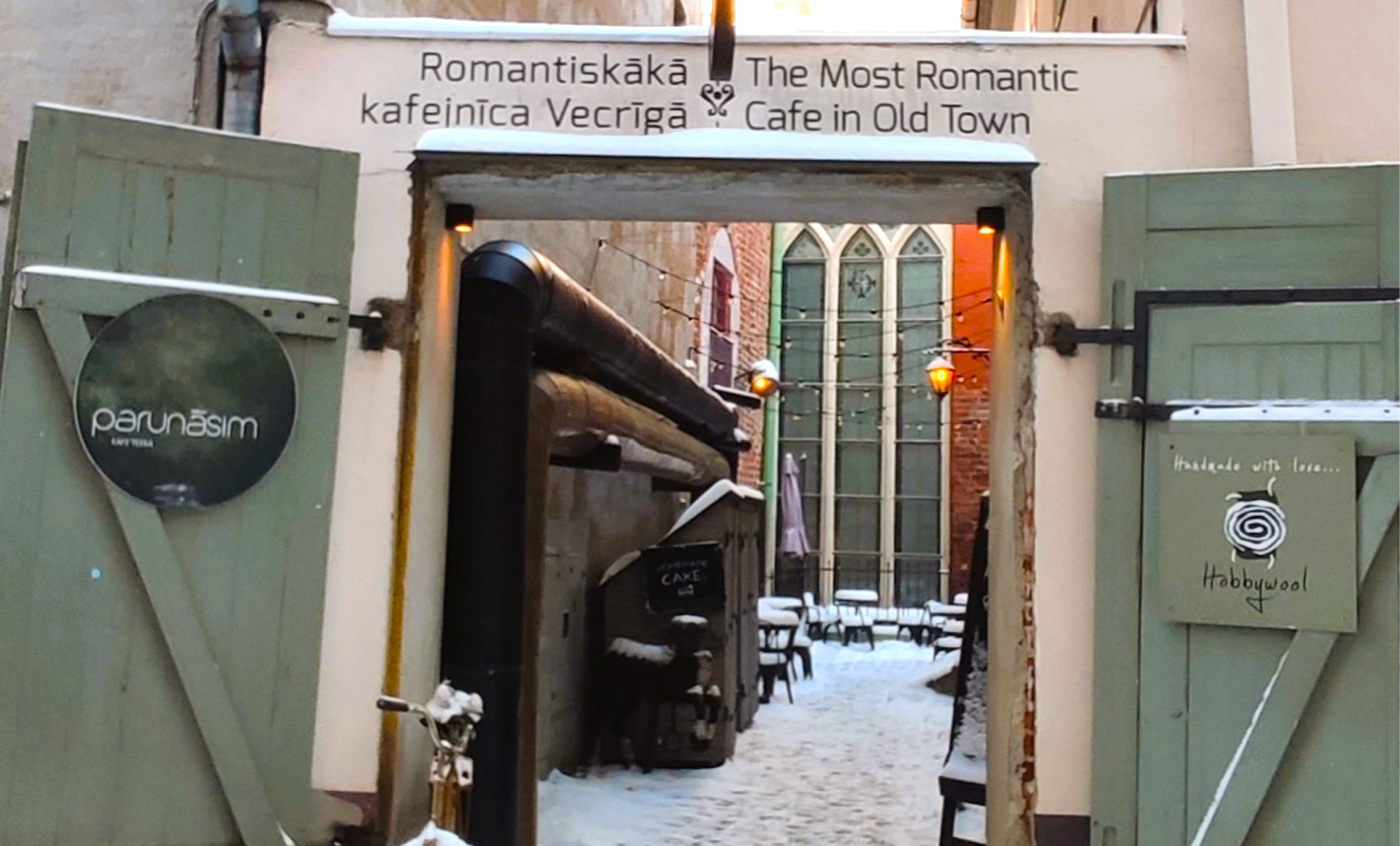
Romantic or not, we thought it was a gem. With its rustic interior, dark wood and cosy corners, it was another perfect refuge from the freezing temperatures outside.
Black Magic
On Kaļķu iela, Black Magic is part café, part bar, part chocolatier and part tourist attraction.
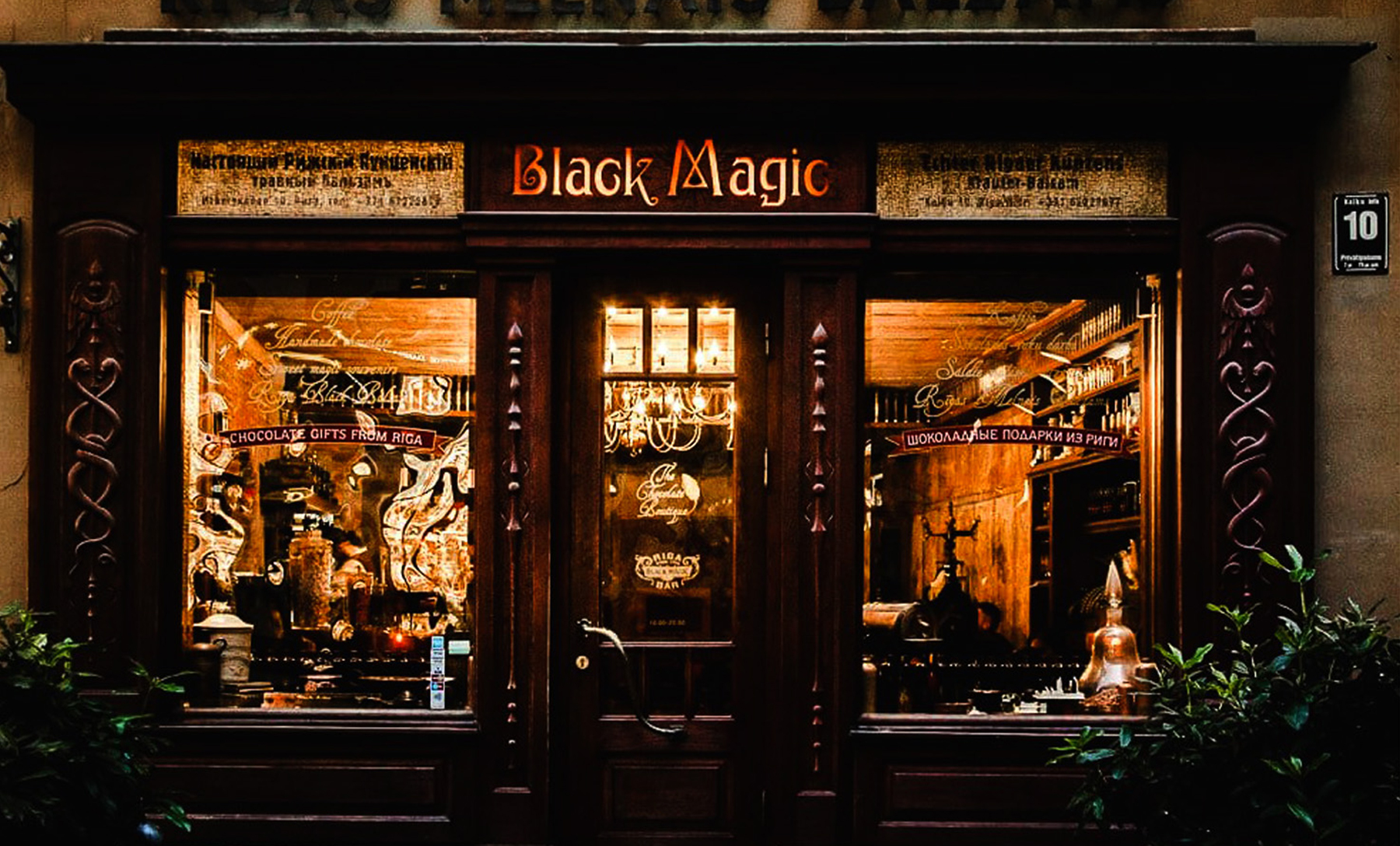
The dark, atmospheric interior feels almost theatrical, and the cakes are heavenly.
The story goes that the apothecary where Black Balsam was first developed in the 18th century was located right here, in the basement. Whether you’re there for the history, the chocolate, the cake or the drinks, it’s well worth a visit.
Folkklubs Ala Pagrabs
On the edge of the Old Town, on Peldu iela, you’ll find Folkklubs Ala Pagrabs, a traditional Latvian pub in a large underground cellar. There is a huge selection of beers, many brewed in the building itself, traditional Latvian food and live music on most evenings.
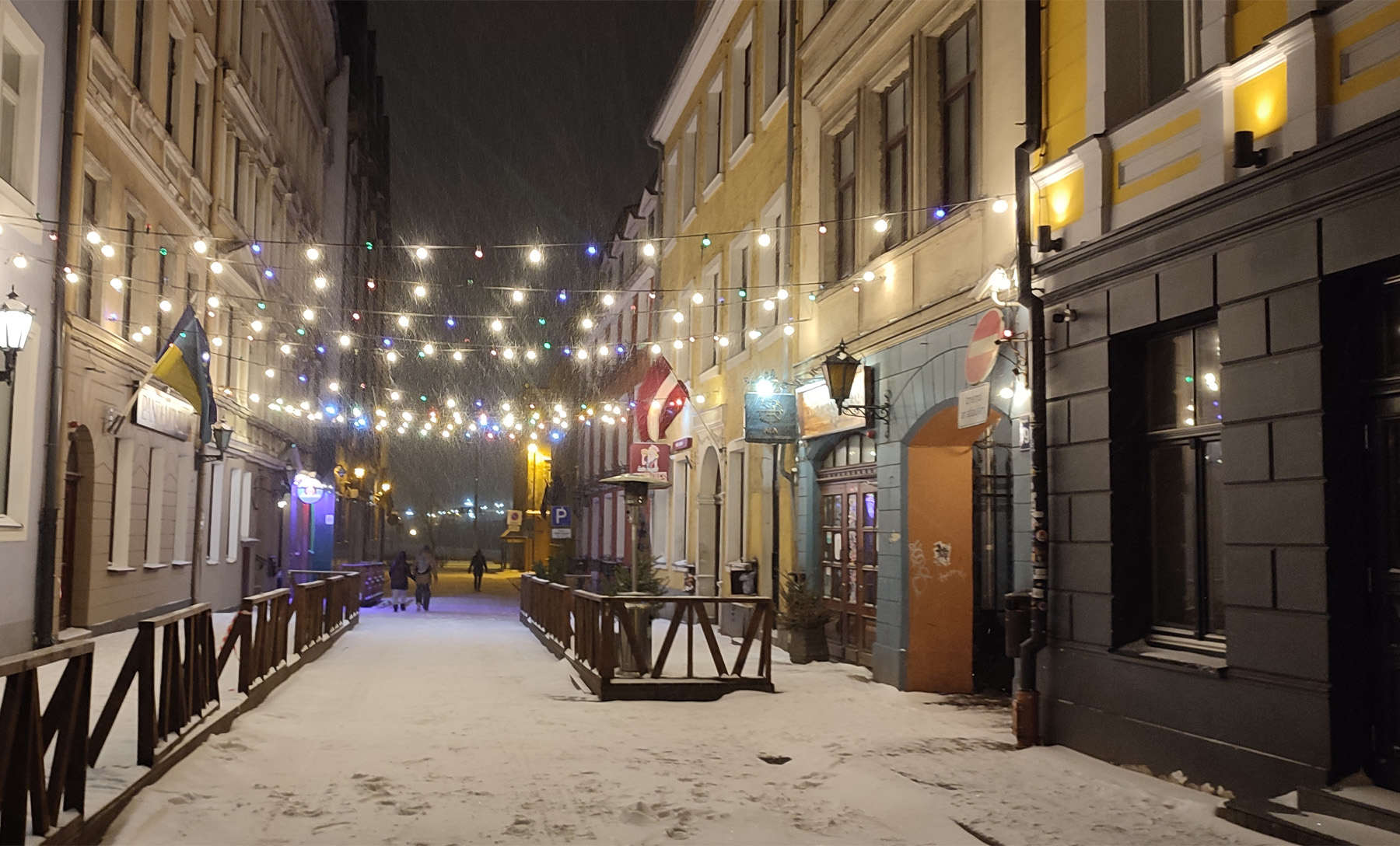
Despite its size, it gets very busy and finding a table can be difficult. We were lucky enough to find seats at the bar, right near the musicians, and the band playing that evening was fantastic. Definitely one of our favourite evenings in Riga.
Lido: Latvian food on a budget
If you want to try traditional Latvian food without spending a fortune, Lido is a great option.
It’s a buffet-style Latvian chain offering a huge variety of dishes, with plenty of choices for every appetite.
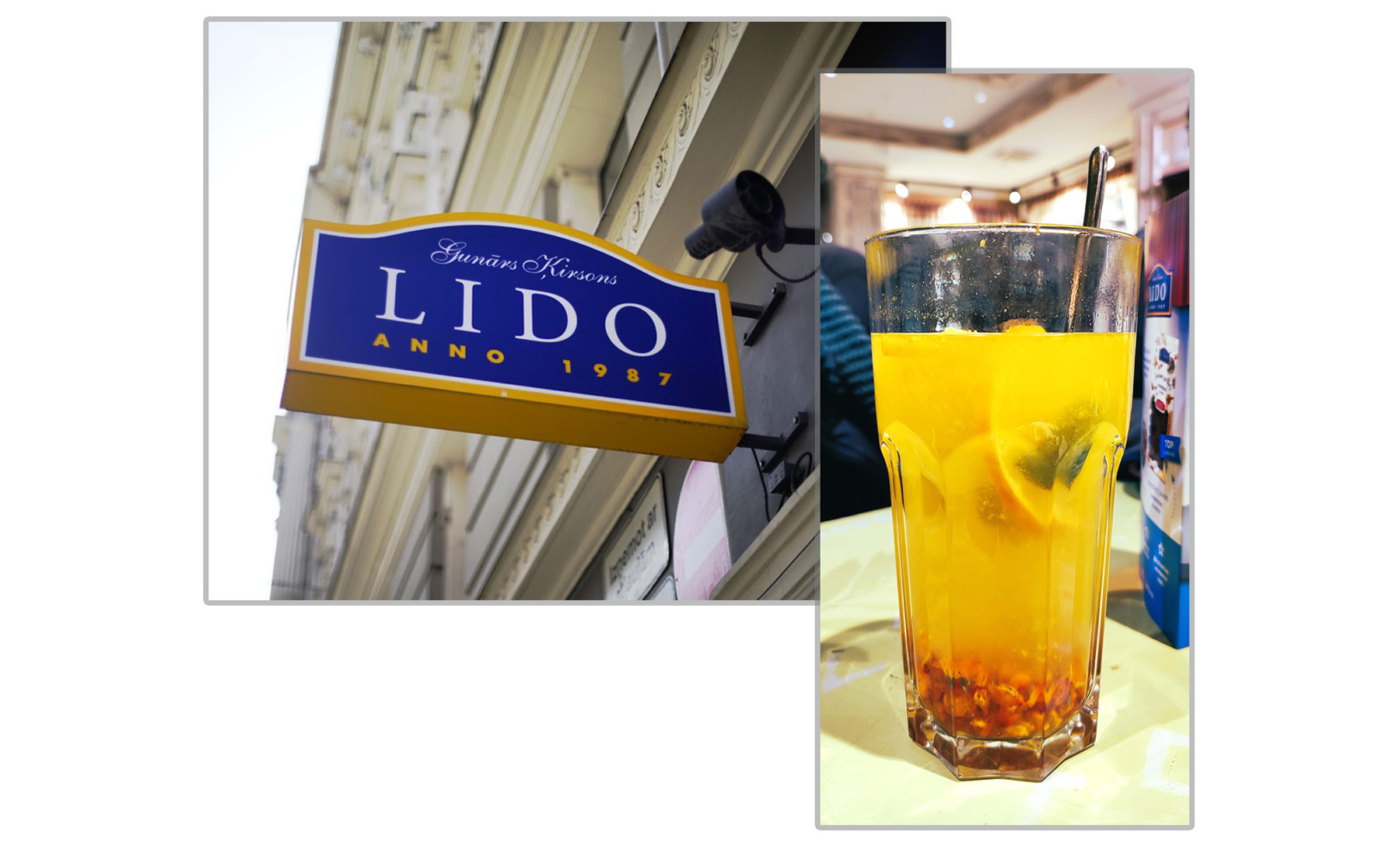
We visited several locations during our stay: Lido Dzirnavas, which became our favourite and where we returned on our final evening, as well as Lido Alus sēta, Lido Origo and Lido Vērmanītis.
One of the things we particularly enjoyed about Lido was that each restaurant has its own unique and charming décor. They all have a slightly different character, making the experience feel much more interesting than a typical chain restaurant. From the traditional Latvian touches to the cosy interiors, each one has its own atmosphere, and we found ourselves enjoying the surroundings almost as much as the food.
The food was delicious, portions were generous and the staff very friendly.
I also discovered their tea cocktail, a hot tea with sea buckthorn. Delicious! On a freezing day, it was absolutely perfect.
Black Balsam — When in Riga!
No trip to Latvia would be complete without trying Riga’s Black Balsam.
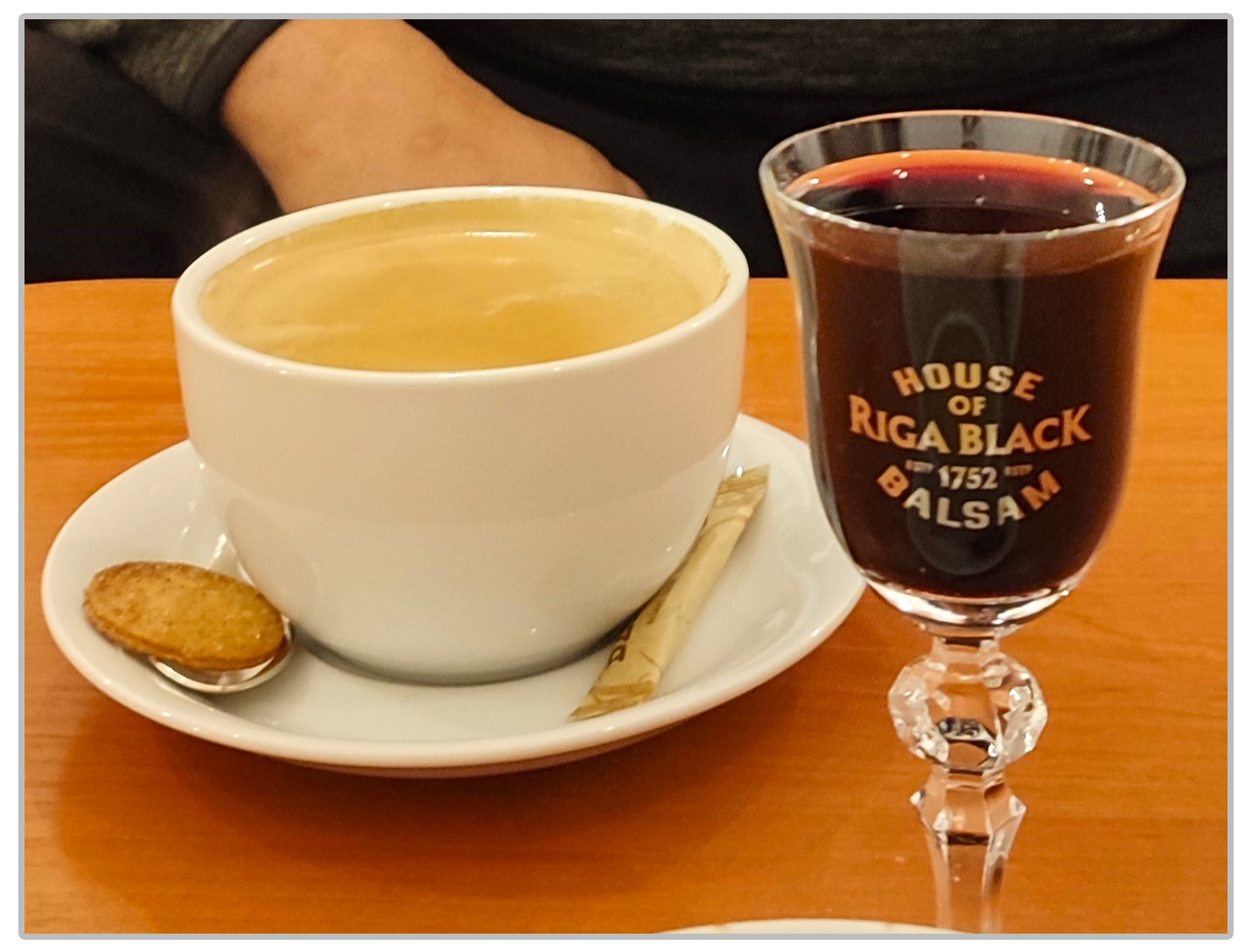
This traditional Latvian herbal liqueur was originally formulated by a pharmacist more than 260 years ago as a medicinal tonic. The recipe combines 24 different ingredients, including berries, roots, herbs, flowers and essential oils.
It comes in several flavours, with blackcurrant and cherry among the most popular, and can be enjoyed with coffee or tea, in cocktails or even over ice cream and desserts.
More than two million bottles are produced every year and exported around the world. Naturally, one of those bottles came home with us. A souvenir with a difference!
Cheers! Or, as they say in Latvia, Priekā!
A few tips for visiting Riga
- Getting from the airport: Riga Airport is connected to the city by taxi, car and bus. We used bus number 22, which was incredibly easy. The stop is just outside the airport, the journey takes around 30 minutes and tickets cost approximately €2. You can pay by card on the bus, and there is plenty of room for luggage. For the return journey, we caught the bus near Origo Mall by the train station.
- Walking: Riga is a relatively small and very walkable city. It’s also fairly flat, so exploring on foot is easy, even in the snow!
- Safety: Before travelling, I read quite a few warnings about pickpockets and scams. Personally, we felt completely safe throughout our visit and never experienced anything unpleasant. As always, though, it’s sensible to stay aware of your surroundings.
- Eating on a budget: Riga is generally very affordable, although prices in Vecrīga can be considerably higher. Move away from the most touristy streets and you’ll find lovely cafés and bakeries where a pastry and hot drink can cost as little as €2–3.
- Shopping: There are several shopping centres and plenty of familiar brands, although prices aren’t necessarily cheaper than in the UK.
- Winter clothing: If you’re visiting Riga in winter, don’t underestimate the cold. Temperatures can drop to around -20°C, so bring proper winter clothing, warm boots, gloves and plenty of layers. You will thank yourself later!
- Getting around by car: There is no Uber in Riga, but they have Bolt instead. Download the app before you go, and you’ll have an easy and affordable way of getting around when your feet have finally had enough.